


Until not many years ago, the greatest obstacle to public involvement in TV commercials was the so-called zapping. In fact, however, TV’s position (even commercial) of monopoly among the mass media was undisputed.
Today, with the multiplication of visual stimuli within the Internet, the prospect is literally flooded by continuous and repeated advertising messages, moreover through many different devices (smartphone, tablet, pc…). This bombardment has sparked a self-defense reaction from the audience, which has reduced its attention towards these stimuli, also perceived as invasive.
Does this mean the death of television commercials? Not exactly.
Eye tracking and television advertising
The Tobii Insights research team, in 2018, conducted a research, based on eye tracking, which examined the spontaneous behavior towards TV of 150 families in 7 different cities in the United States. The results were analyzed to help advertisers and marketers understand how viewers interact with TV ads, in order to create better performing advertising campaigns, with greater returns on investment.
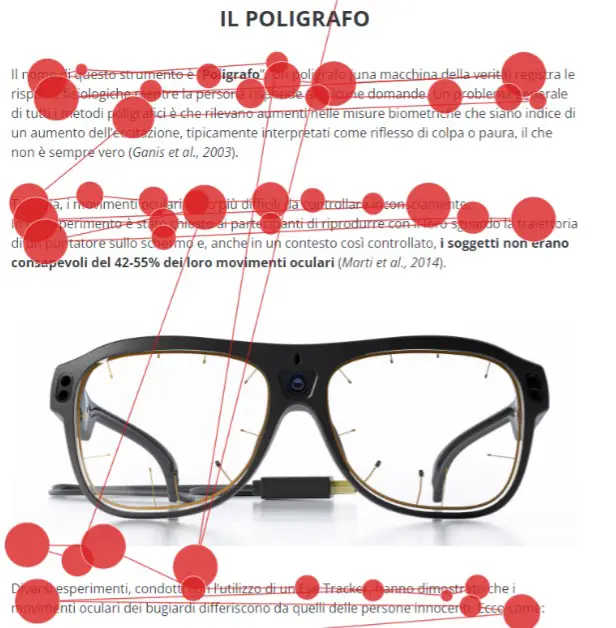
The participants, distinguished into different demographic groups, wore eye tracking glasses during the viewing of more than 3000 commercials. Unlike other research methods, eye tracking provides accurate and objective answers exactly on what viewers are looking at: which ads they see, how long they look at them, which elements visually attract them, which repel them and so on. Obviously this is valuable information for the entire chain, from the creatives of advertising agencies to advertisers.

Key results of the research
- Viewers pay less attention to the advertising message towards the end of the break
BUT
- General attention rises towards the end of the program they are following
- The number of views of short spots is much higher than long spots (and this is easily understandable, as the attention threshold for commercials has dropped significantly)
- Millennials watch TV, spots included! Obviously in a lower percentage compared to Generation X
(remember the data refers to the USA field, even if we feel confident in extending this data also to Italy. It would be interesting to proceed with a similar research through eye tracking on our television audience, to have the Italian percentages)
- Old jingles are the absolute evil, unlike current hits which constitute the best possible musical carpet
- Spots are more engaging when they refer to easily accessible products/services.
Resource: Tobii
Want to know more? Contact us