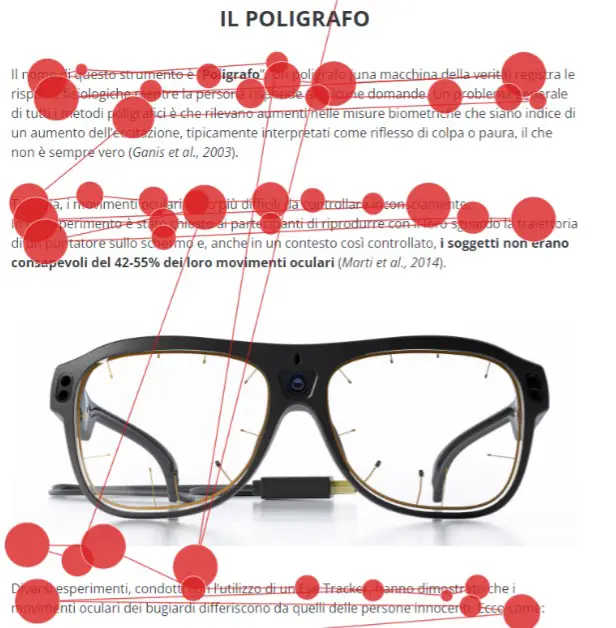


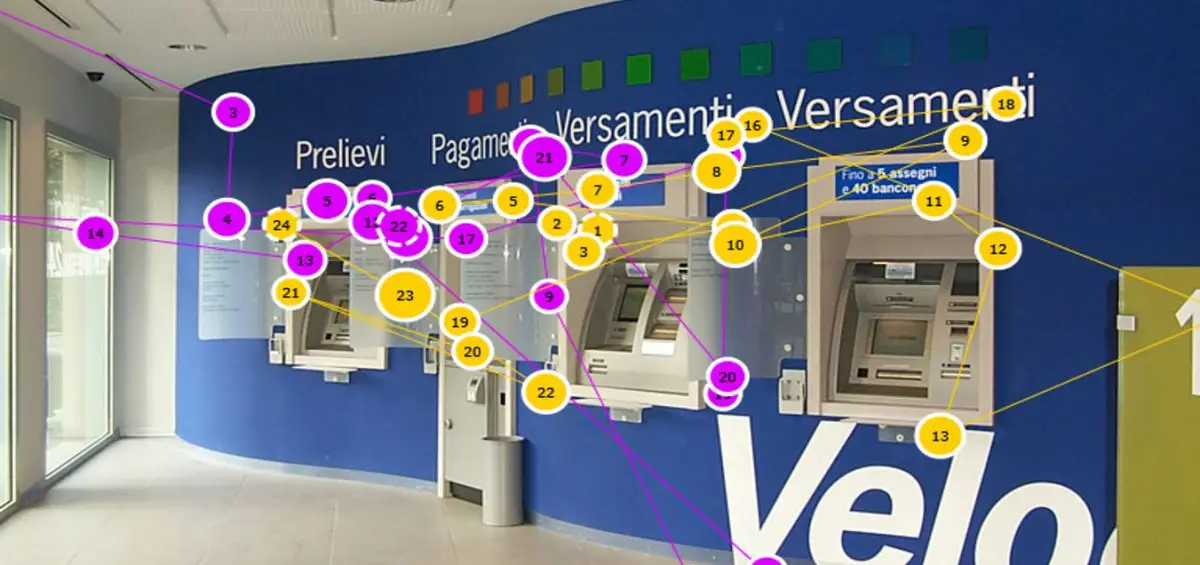
Eye tracking is used in numerous scientific research sectors and for various applications within the field of marketing.
Obtaining information and classifying it based on objective criteria, thanks to the study of the gaze direction of one or more people, is useful in a range of contexts: from psychology to medical diagnosis, to neuromarketing applications and beyond.
Here is a first quick look, certainly not exhaustive, at some fields of use.
Eye tracking in psychology
Understanding when and how people look is essential to understanding how attention is distributed. Eye tracking is widely used in standard psychological tests, such as the IAT (Implicit Association Test), the Stroop Test, and the Iowa Gambling Task, as well as within the contingent gaze paradigm.
Eye tracking in healthcare
Eye-controlled communicators, such as the Tobii Dynavox® I-Series®, have long been used as communication aids for people (adults and children) with reduced motor and/or cognitive abilities. In Italy, these devices are included among disability aids and are fully covered by the SSN (National Health Service).
The software included in the different communicator models allows for a targeted cognitive path to gradually develop and improve the communication skills of the users (children or adults).
If the disability is solely motor and speech-related, the user is enabled to manage complex functions through the eye tracker, such as the control of household appliances (home automation), internet browsing, and their own social profiles.
Eye tracking applied to neuromarketing
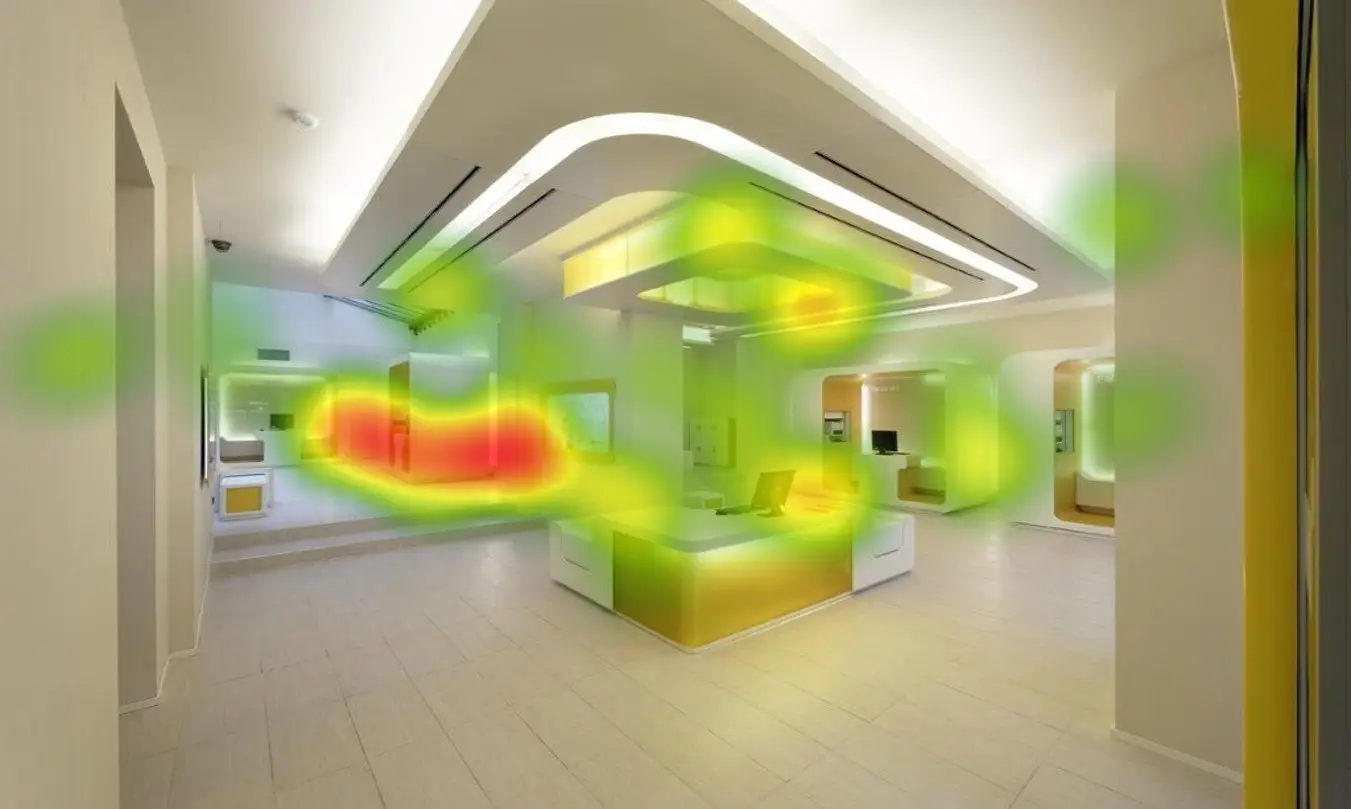
Eye-tracking technology has been used for many years now in the field of neuromarketing analysis.
The scientific study of what people look at, or choose not to look at, during the shopping experience is fundamental for countless marketing actions: the optimal design of packaging, the creation of a store layout, and the arrangement of products on shelves. Furthermore, it can be used to correct errors, increase sales, and so on.
The same applies to a website: UX (user experience), which in certain contexts like e-stores constitutes practically 100% of the site’s value, is measurable through eye-tracking analysis. These analyses monitor parameters such as the time taken to find a specific product, which types of visual information are ignored despite being theoretically attractive, and all those values that determine the correct usability of a website.
In summary, eye tracking records:
- What people look at, whether through a screen or in the real world;
- When attention is focused on specific visual elements;
- How long each fixation lasts;
- The order in which visual elements are fixated upon;
- Whether an individual’s gaze returns to a previously viewed visual element.
Going further, data analysis can reveal:
- Why a person looked at a certain visual element;
- How they felt when facing a specific scene, image, or object.
With the evolution of information technology, eye tracking has become an accessible and easy-to-use methodology in human behavior research. Its use continues to grow and spans academic and commercial disciplines far beyond the fields mentioned above.
Want to know more? Contact us