

To analyze the influence that emotional and attentional processes have on consumer reactions and behavior, at SR Labs we propose 4 direct measurement methodologies.
eye tracking
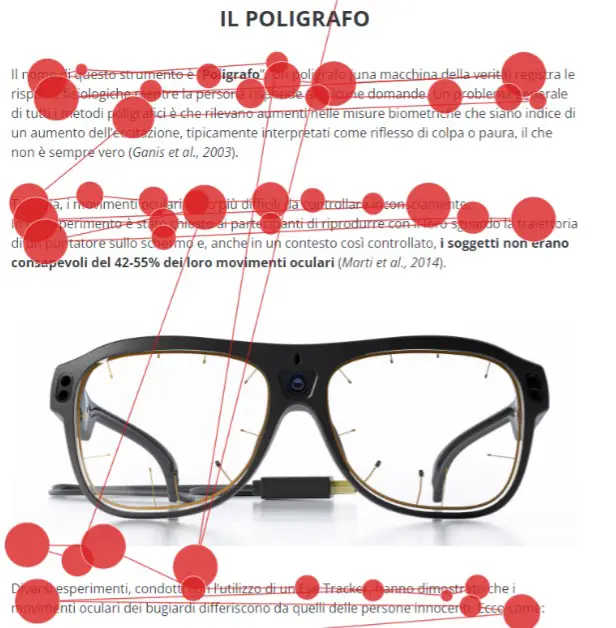
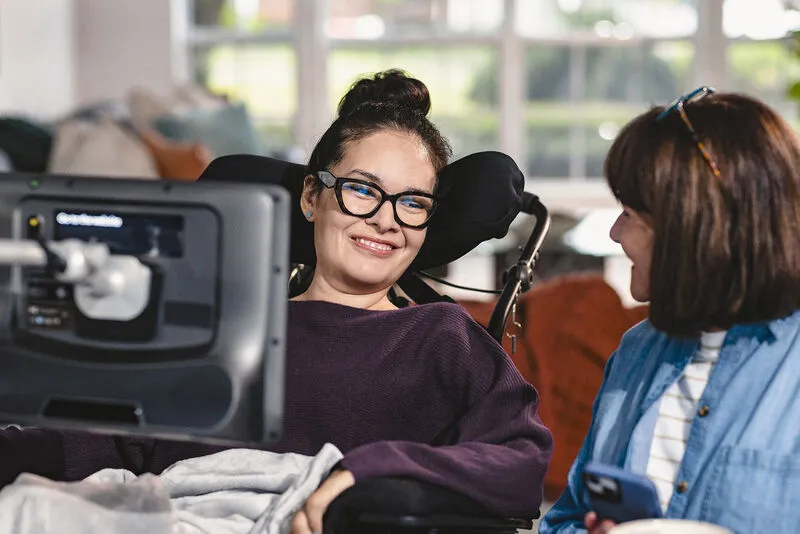
By using a non-invasive, high-frequency Eye Tracker, it is possible to record eye movements and the exploratory behaviors of subjects engaged in the interaction or exploration of any communication material or real-world environment.
We can therefore identify the elements of a communication, a package, etc., that attract the consumer’s attention, those on which they focus their interest, and those that are instead ignored.
Eye tracking allows for making the impact of visual communication objective and quantifiable; it is fast, occupying the subject for only a few minutes, and provides a vast amount of diverse data collected simultaneously with a single instrument, offering deeper and more complete explanations for behavioral evidence.
eeg biofeedback
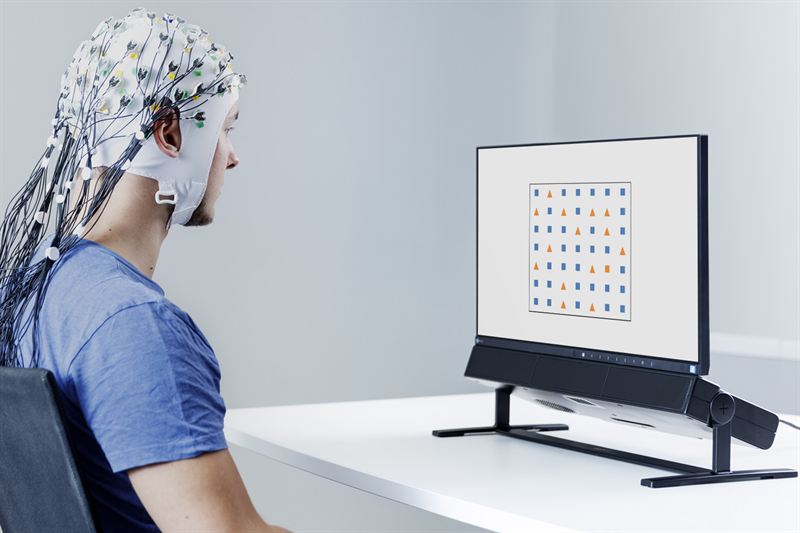
The detection of brain waves provides data regarding the different mental states the subject is in while interacting with a stimulus. In this way, the consumer experience is reconstructed moment by moment, based on these metrics:
engagement
the level of involvement regarding what is happening.
focus
the attention dedicated to a particular task/event and its possible absence (distraction).
interest
the degree of attraction or avoidance toward the activity being performed.
stress
measures the level of comfort during an activity. A high level of stress indicates complexity and a sense of inability to complete a task.
This type of examination allows for outlining the kind of “instinctive” relationship the subject had with the stimuli they interacted with (automatic reactions are not under voluntary control).
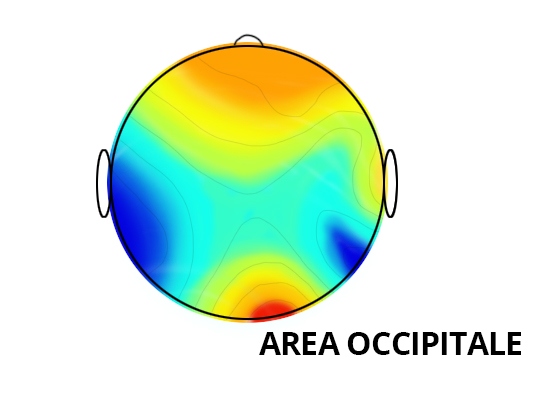
Registered EEG data allow us to derive indications regarding the activation level of different brain areas on a scalpmap (viewing the top of the head from above).
The image shows the power observed at 12 Hz (within the range of alpha waves) during a 90-second acquisition of a subject in a relaxed state with eyes closed. The area showing the highest alpha band power is the occipital area (highlighted in red); this is expected in a subject with eyes closed, as it is known that alpha band power is inversely proportional to neural activity.
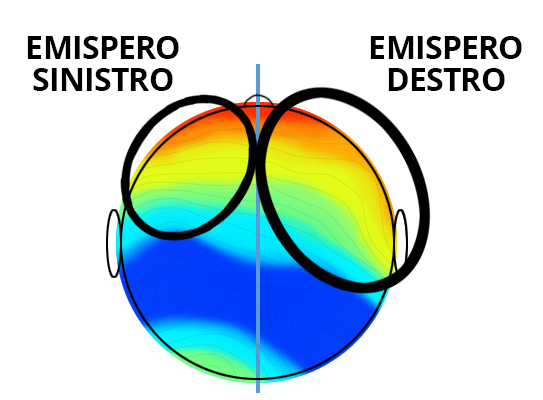
Alpha band power of a subject shown 10 emotionally positive images from the database.
The right side appears characterized by a greater presence of alpha waves (in red) compared to the left hemisphere. This phenomenon corresponds to an approach motivation toward the image.
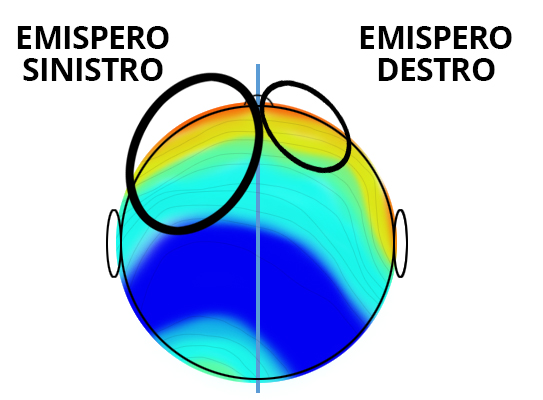
This image represents the result obtained by showing 10 negatively connoted emotional images.
The left frontal area shows a greater presence of alpha waves (in red) compared to the right (where red is absent, showing at most orange/yellow). This phenomenon indicates a motivation of withdrawal, annoyance, or generally an emotionally negative response toward the image.
face emotion recognition
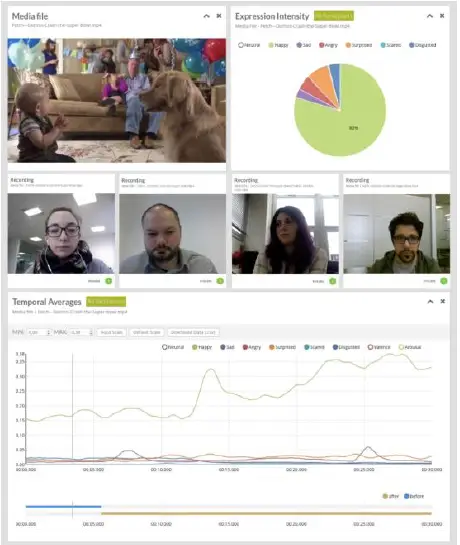
This is a test that evaluates consumer engagement. It verifies the emotional impact of communication and helps determine which of its elements proves to be the most activating.
The results:
- Did the communication produce an emotional reaction in the consumer or leave them “neutral”?
- Which specific element or moment triggered the emotion?
- Is the reaction classified as positive or negative? Does it promote an approach or avoidance attitude?
- Is the reaction mild or strong? Momentary or prolonged?
The communication to be tested (commercial, trailer, etc.) is shown to the subject, whose only task is to observe it. It provides feedback on the extent to which a stimulus triggers emotional arousal in people. It also provides the “color” (valence) of such emotions.
galvanic skin response
Skin conductance, referred to by the acronym GSR (Galvanic Skin Response), is based on the variation of the skin’s electrical resistance caused by emotionally evocative stimuli. This variation stems from the moisture level of the skin itself, due to the action of the underlying sweat glands. It originates from the activation of the autonomic nervous system, specifically the sympathetic nervous system.
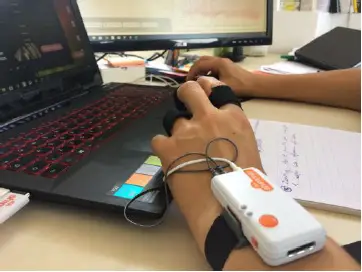
The GSR signal is very easy to record: generally, two electrodes applied to the index and middle fingers of one hand are sufficient. The variation of a low-voltage current applied between the two electrodes is used as a measure of Electrodermal Activity (EDA).
- ENGAGEMENT: the level of involvement regarding what is happening
- INTEREST: the degree of attraction or avoidance toward the activity being performed
- STRESS: measures the level of comfort while performing an activity. A high level of stress indicates complexity and a sense of inability to complete a task.
The different proposed methodologies can be activated and combined very flexibly based on the objectives identified during the pre-analytical phase.
They can be used individually or in synergy. Everything depends on the type of stimulus presented and the purpose of the research.
Want to know more? Contact us