

In recent years, many technologies have been developed that can be employed in professional settings with various objectives: from training to environmental risk detection, and from performance improvement to the streamlining of maintenance activities.
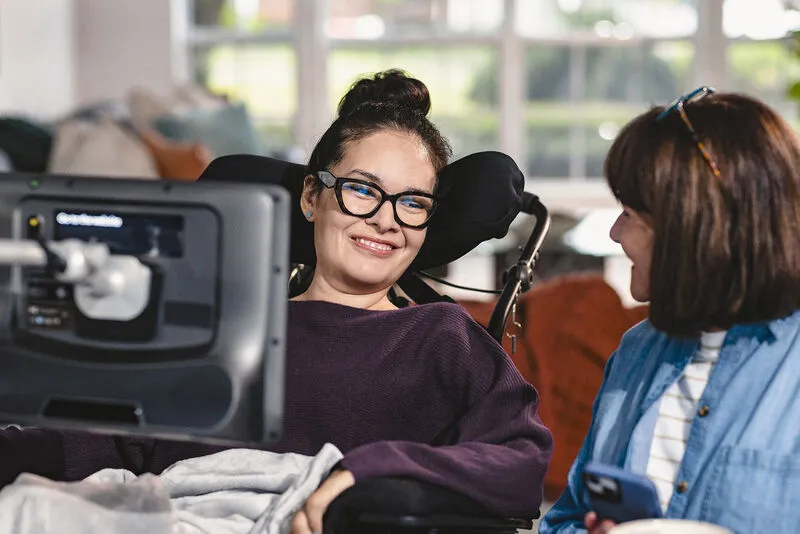
Eye tracking is one of these. Already utilized in the medical/healthcare field and in the world of caregiving (allowing bedridden patients with no other means of interaction to use their eyes to communicate), in marketing (to deeper understand consumer behavior), and in the creation of products and services (to make them more user-friendly for end-users), it is now increasingly used in industrial, workplace, and sports performance contexts.
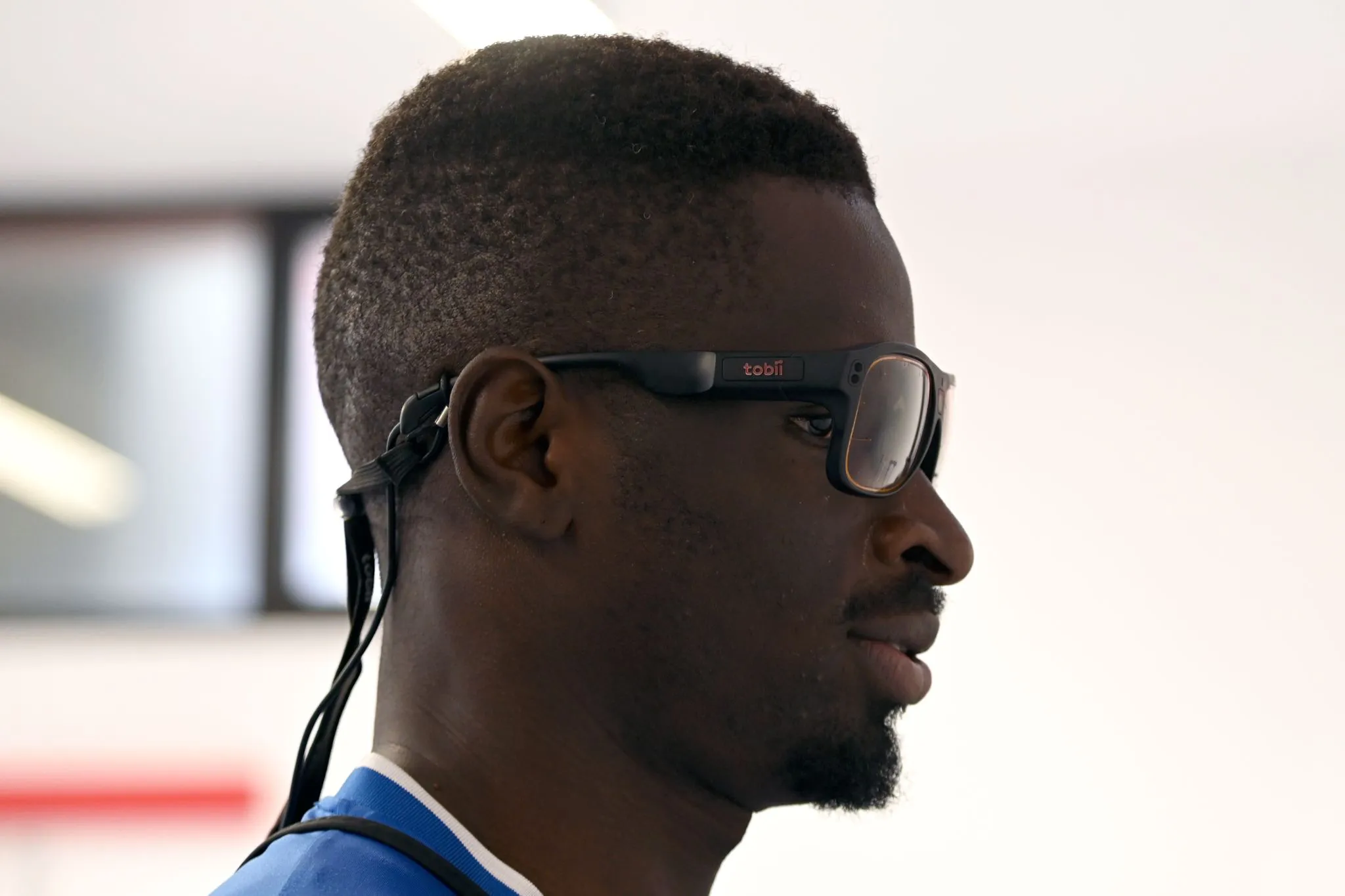
The expansion of its fields of use outside of scientific laboratories has been made possible thanks to the reduction in the invasiveness of this equipment. Currently, eye trackers have reached such portability that they do not interrupt or influence the activity of the person wearing or using them.
How it works
An eye tracker is an instrument that allows for the recording and evaluation of a person’s eye movements, making it possible to understand where they are looking, what they are paying attention to, and conversely, which stimuli they are neglecting.
Its operation is based on a system that utilizes light with a frequency near-infrared. This frequency band is below our perceptual threshold; therefore, we do not see it with the naked eye, but when directed toward the eyes, it generates a physiological reflection of the cornea that is indeed visible. This reflection is captured by video cameras integrated into the device, which allow for the reconstruction of the gaze direction with great precision and accuracy.
In addition to this, eye tracking also detects the position and orientation of the head and, thanks to the integrated gyroscope, also the position and movements of the body.
By allowing us to monitor professional activity in real-time through the eyes and the unique perspective of the operator, this technology gives us access to a series of objective and behavioral data, often collected without the worker being fully aware of it, that can complement current performance evaluation methods and the programming of training interventions.

Professional fields of application
In the horizon of Professional Performance, the areas in which this technology is applied are:
TRAINING:
In jobs involving complex tasks, it is difficult for an expert to convey to a novice a series of techniques and practices that have been acquired through experience (for example, how to find information, on which elements to base decisions, which execution methods are most convenient to adopt).
Monitorando con eye tracking le dinamiche operative dell’operatore esperto, viene delineata una strategia visiva/comportamentale ottimale e, a partire da essa, si strutturano dei protocolli di training maggiormente efficienti in termini di tempi e costi. Quindi come strumento di coaching, il tracker serve per seguire dal vivo l’operato del lavoratore in addestramento in modo da dargli feedback immediati, anche in quei contesti in cui, per vari motivi, non è possibile realizzare una presenza in situ del supervisore.
Nei contesti internazionali, inoltre, permette di mostrare il comportamento visivo e operativo superando la mediazione linguistica che spesso causa fraintendimenti. La conoscenza dell’esperto, così messa a sistema, non solo passa al novizio, ma diventa un asset dell’azienda stessa e non si disperde quando il lavoratore con elevate competenze, abbandona o cambia mansione.
PRODUCTIVITY:
Dysfunctional processes that prevent the achievement of operational excellence are identified, and all obstacles to the correct execution of a task are removed. Furthermore, the usability of tools is improved, and efforts are made to facilitate interaction with equipment and the work environment.
Tasks that require excessive cognitive load are highlighted and modified where possible. Reducing the cognitive load for the worker has a positive impact on the number of errors committed.
Safety:
The level of risk perception and attentional strategies are measured with greater precision and objectivity, with the aim of implementing or improving hazard signage and increasing the operator’s discriminative capabilities.
Concentration, focus on specific elements, and the measurement of attentional capacity (and how it is distributed) are key indicators in the concept of “situational awareness”. This is the mindset that allows one to achieve awareness of the environment in which they are placed, to understand which problems must be faced, and how serious they are.
The lack or temporary loss of situational awareness can be a contributing factor to accidents or human error.
The relevance of eye-tracking technology, therefore, lies in allowing a deep understanding, from perspectives previously unreachable directly, of the work environment, executive processes, and worker behavior.
Deeper knowledge of all these factors increases workplace safety, optimizes procedures, tools, and equipment, and allows for the programming of training activities in a more realistic and efficient manner.
A case history
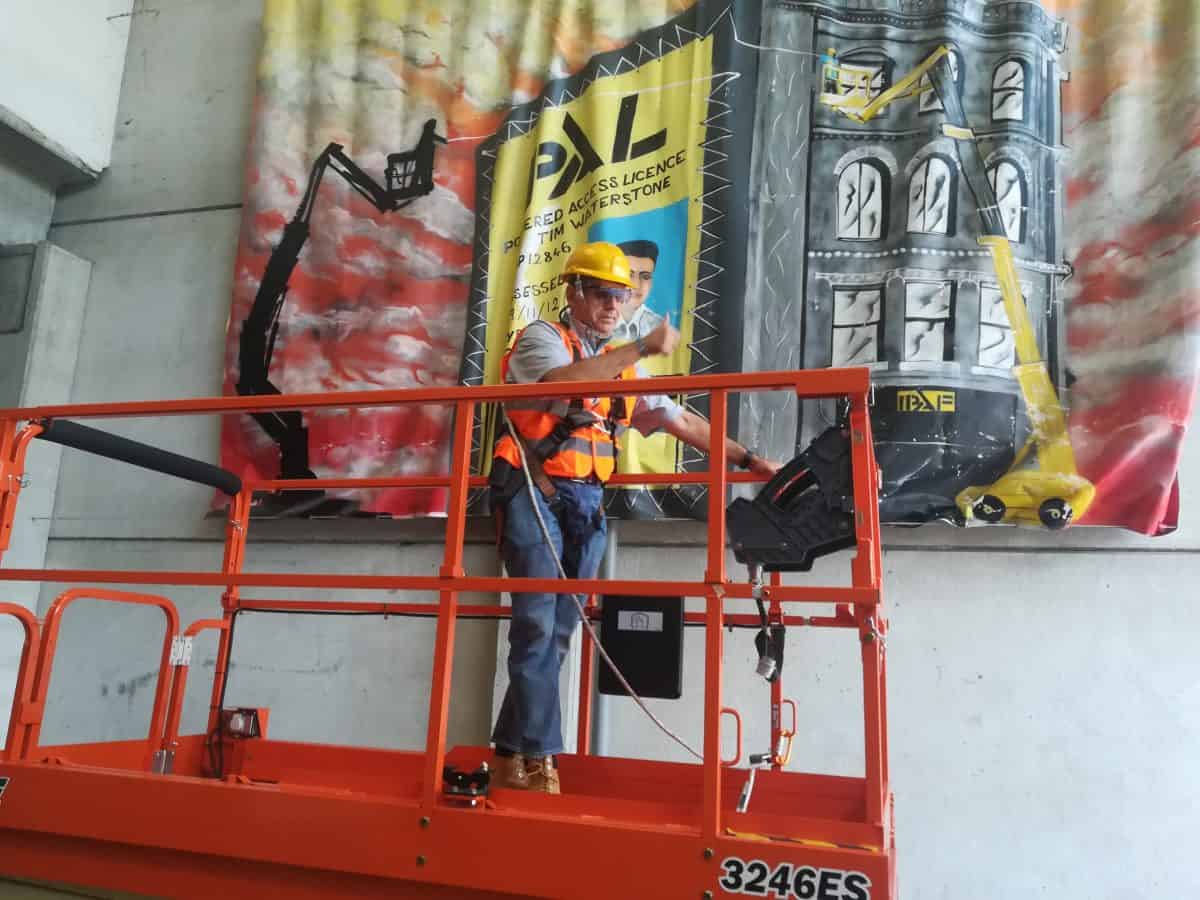
Rental Blog coordinated an applied case history in the field of “safety training for the use of dangerous vehicles,” in collaboration with SR Labs (eye-tracking technology provider), JLG (which provided a scissor lift platform), and Vismara SA, with the direct expertise of Paolo Vismara, a senior IPAF trainer and expert in corporate safety and safety training for many years.
The entire project was under the supervision of the Marketing and Communication division of IPAF Italy, which I have the honor and responsibility of managing personally.
The objective of the applied case study was to verify the visual behaviors of the operator (for example, a candidate obtaining a license) to realize—through the focus of their gaze on the machine controls or the surrounding environment—the level of awareness and risk management during every phase of the maneuver.
We have created an interesting video that shows, in parallel, the point-of-view (POV) of the gaze through the eye trackers and the standard filmed view of the activities performed.
I would like to personally thank all the figures involved in the project: Lorena Delvino from SR Labs (whom I also thank for her collaboration in drafting this article), Luciano Gardin and Nicola Pontini from JLG, and Paolo Vismara from Vismara SA.
Want to know more? Contact us