


SR Labs is the official reseller of Wearable Sensing wearable EEG products for the Italian market
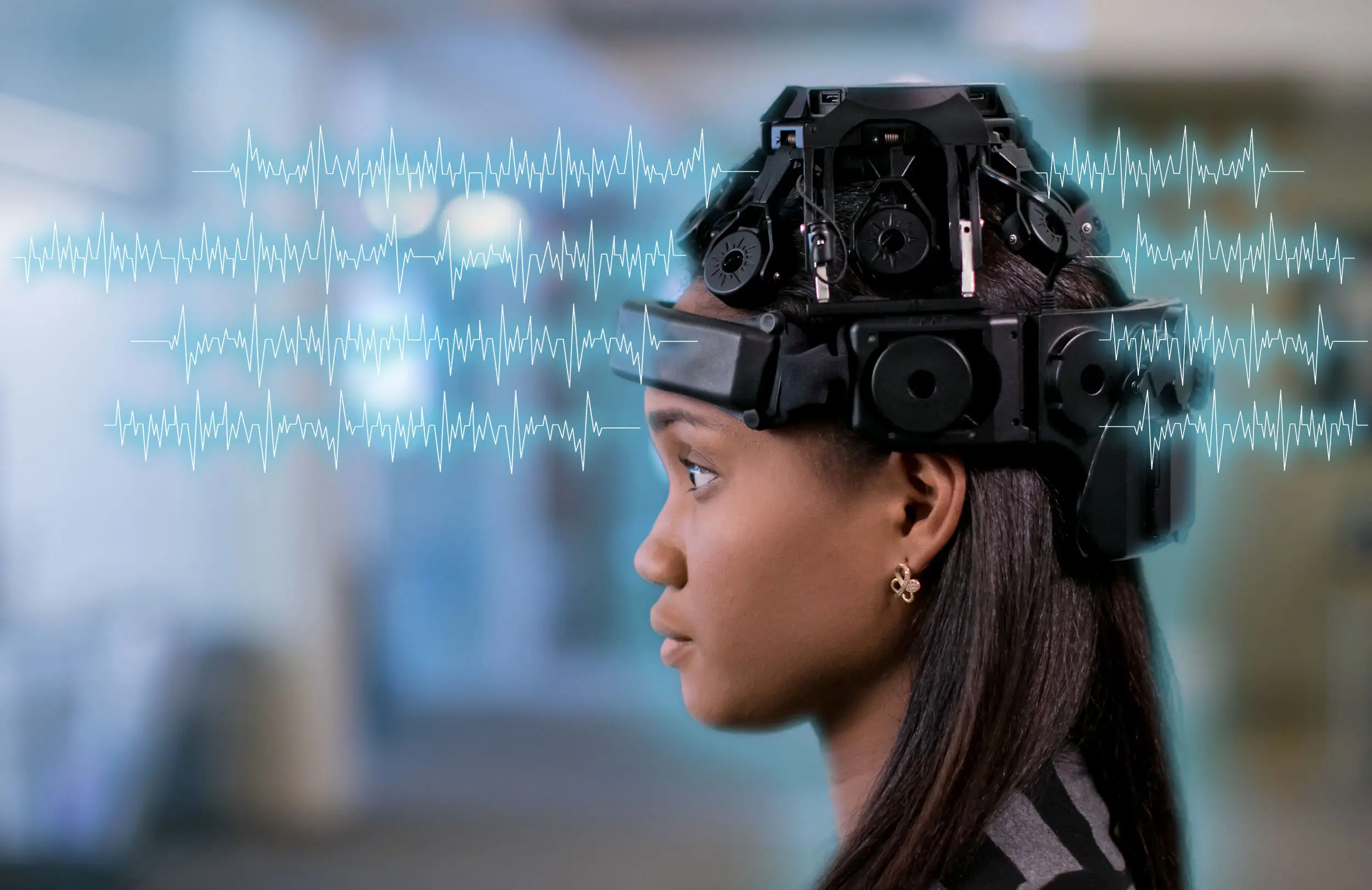
SR Labs has chosen to take on a new challenge: expanding its product range to include EEG technology. Since September 2019, we have been official resellers of EEG technology from WEARABLE SENSING, an American company founded in 2013 and based in San Diego. In collaboration with QUASAR (Quantum Applied Science and Research), the company has patented the highest quality dry sensors available on the market today.
SR Labs represents WEARABLE SENSING products with the aim of promoting the many competitive advantages this technology offers compared to traditional EEG headsets within the Italian market.
EEG Technology
WEARABLE SENSING products allow for the detection of brain activity through EEG.
EEG measures the current flow generated by the sum of the activity of a large number of neurons. The activity of neuronal populations in a specific brain area is detected by sensors (electrodes) placed on the surface in contact with the scalp. This detection is the result of the activity of neurons corresponding to the cortical area beneath the electrode. In particular, the instrument detects the electric potential difference between an “active” electrode, where neuronal activity takes place, and an “indifferent” (reference) electrode placed at a certain distance from the first.
Competitive Advantages
WEARABLE SENSING products offer significant competitive advantages over traditional EEG headsets. Among the main strengths are the dry sensors. This type of sensor allows the electrode to be applied directly to the scalp, thus eliminating the need for conductive gel required by standard conventional EEG headsets.
This allows for faster set-up and clean-up procedures for each individual recording while maintaining a high degree of signal accuracy and registration reliability (high correlation with conventional gel-based electrode systems).
The instrument allows for data collection during ambulation (walking) and/or in natural contexts thanks to its resistance to artifacts (eye blink, jaw clenches, pulse, motion).
The product range features a user-friendly design, engineered for repeated and prolonged use for every single recording, making it comfortable to wear and adaptable. Furthermore, the instruments transmit data via Bluetooth to an external PC, allowing the user to walk or be involved in other activities without being physically connected to a computer. Each product has different specific characteristics that can be viewed in the specific product data sheets.
DSI-EEG+FNIRS
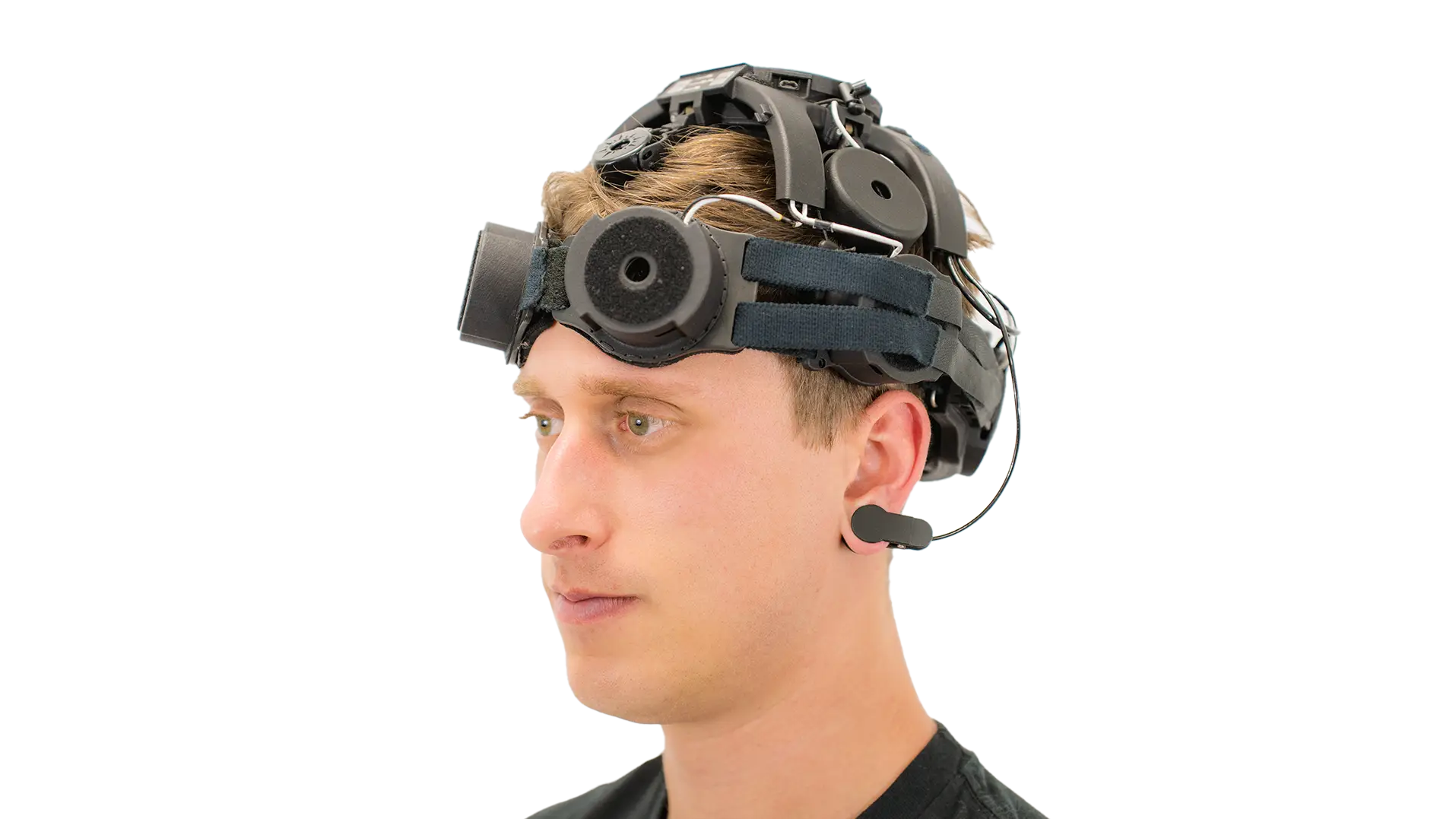
The wireless DSI-EEG+fNIRS system by Wearable Sensing is the first truly hybrid system, allowing for simultaneous and automatically synchronized recordings of dry EEG and fNIRS from the same location.
The system is built with Wearable Sensing’s leading dry electrodes in terms of signal quality and comfort, featuring integrated Archinoetics ultra-bright LEDs within the emitters. The DSI-EEG+fNIRS takes, on average, less than 3 minutes to set up, making it the ideal solution for scientists who require a simple and easy-to-use EEG system.
Our patented sensor technology not only provides uncompromising signal quality but also allows our system to be virtually immune to motion and electrical artifacts.
Fields of Application
WEARABLE SENSING products are non-medical devices that find application in various fields.
Research
Among the primary sectors, EEG technology is widely used in research fields such as neuroscience, cognitive psychology, psychophysiology, and neuroergonomics.
Neurofeedback
Neurofeedback Another area of application where EEG technology has found significant room for use is neurofeedback. This increasingly growing market utilizes neurotraining programs in which the user’s EEG is tracked; through sound-based reinforcement feedback systems, the user is educated to remodulate their own brain activity. This technique has found application with significant benefits in various clinical and non-clinical contexts, such as the treatment of depression, anxiety, ADHD, chronic fatigue syndrome, fibromyalgia, sleep disorders, Tourette syndrome, obsessive-compulsive disorder, and in the field of cognitive performance enhancement.
Brain-computer interface
A BCI is a neural interface based on electroencephalography (EEG) that is capable of allowing the Central Nervous System (CNS) to communicate with an external peripheral device through specific electrodes.
Neuromarketing
The application of EEG in neuromarketing allows for mapping brain activity and consumer experience even in natural settings. It enables the measurement of the ability to evoke engagement responses along an e-commerce navigation path, a website, or during the viewing of an advertisement.
Want to know more? Contact us