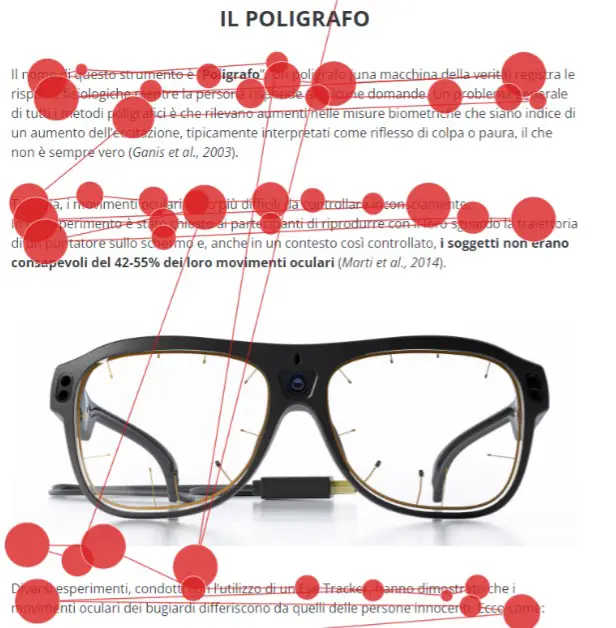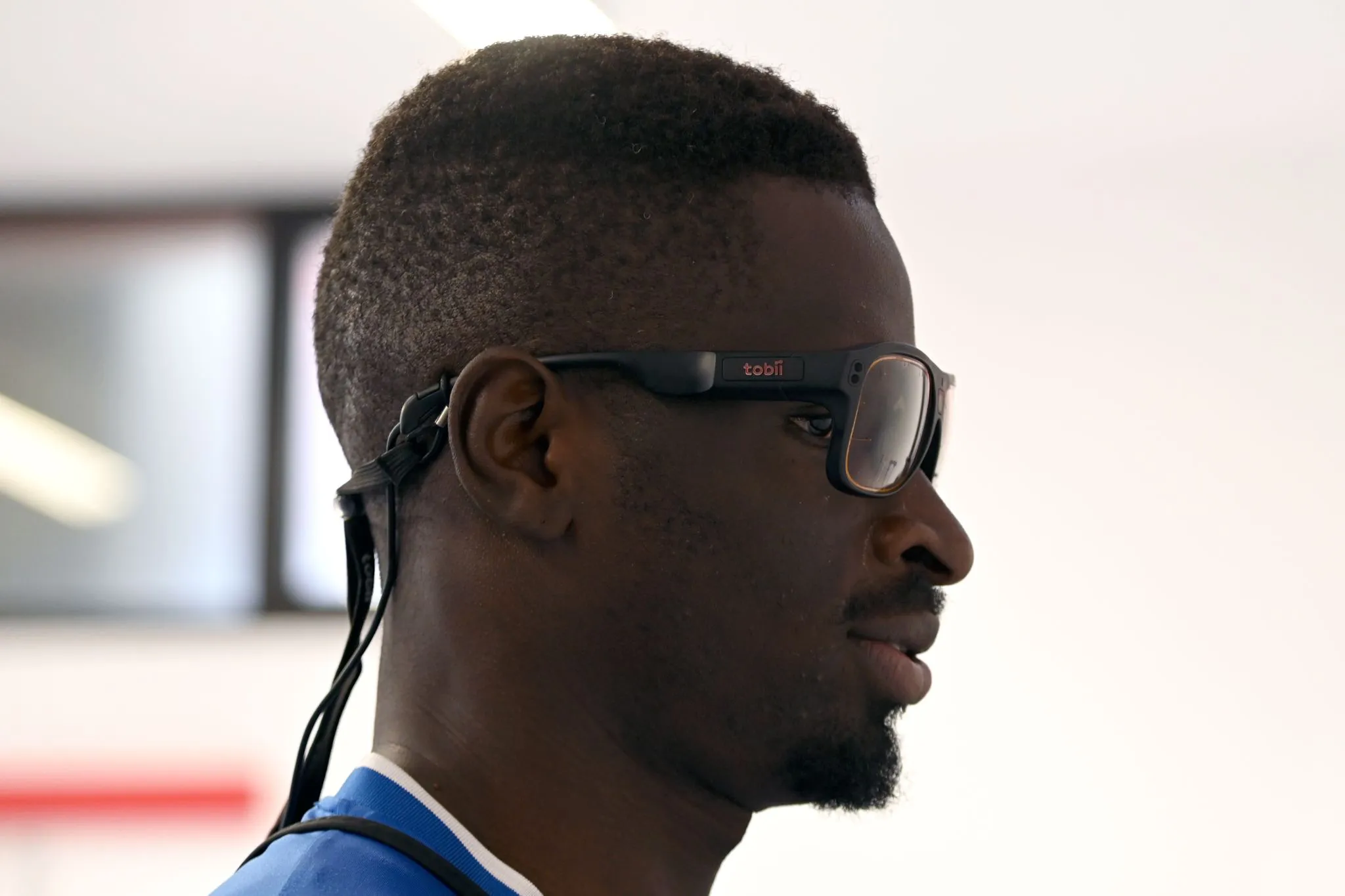



Below is an interview conducted by Studio Volpi with our User Experience & Eye Tracking Lab Manager, Raffaella Calligher, who goes into detail about how eye-tracking technology works.
Eye-tracking instruments are based on a physiological principle: the corneal reflection of infrared light. Every eye tracker—whether integrated into a screen or into glasses—possesses emitters, which are light sources that emit infrared rays, invisible to the human eye because they are below the threshold of perception.
The rays are absorbed by all parts of the face except for the cornea, which reflects them instead. It is precisely this reflection, captured by the cameras integrated into the eye tracker, that allows for the reconstruction of the pupil’s position, differentiating the movement of the left and right eyes.
Eye trackers can have different frequencies, from 30 to 2000 Hertz, which means the camera captures eye movement from 30 to 2000 times per second, recording what is observed with extreme precision. A complex algorithm then analyzes the acquired data, providing a result that tracks and explains the exact position of the user’s eye.
How eye-tracking technology works
What does it mean for the Marketing & Usability research sector to have a unique point of view on a user’s experience and visual perception?
This is told by Raffaella Calligher, manager of SR Labs, a well-equipped and flexible research center, one of the few of its kind in Italy and among the first in Europe. The center analyzes eye movements and has collaborated with Studio Volpi on several projects
“Through eye-tracking technology, we can record the visual and exploratory behaviors of users and thus obtain very precise information about their experience of use, for example, when placed in front of an interface or a website, and about behaviors of which the subject themselves is not fully aware.”
Eye tracking in healthcare
Eye Tracking technology—which is not a total novelty in the research sector, but whose consumer-level introduction is effectively so—is divided into active and passive. Active eye tracking is extremely useful for individuals with chronic or temporary disabilities and ALS patients.
By using graphic interfaces that respond to eye movement, people can explore a web page, interact on social media, make a call, or write using only their gaze. This type of technology is widely applicable in healthcare and brings the implicit and fundamental advantage of allowing those who would otherwise be unable—due to being prevented from using their limbs—to communicate.
Marketing: improving it with eye tracking
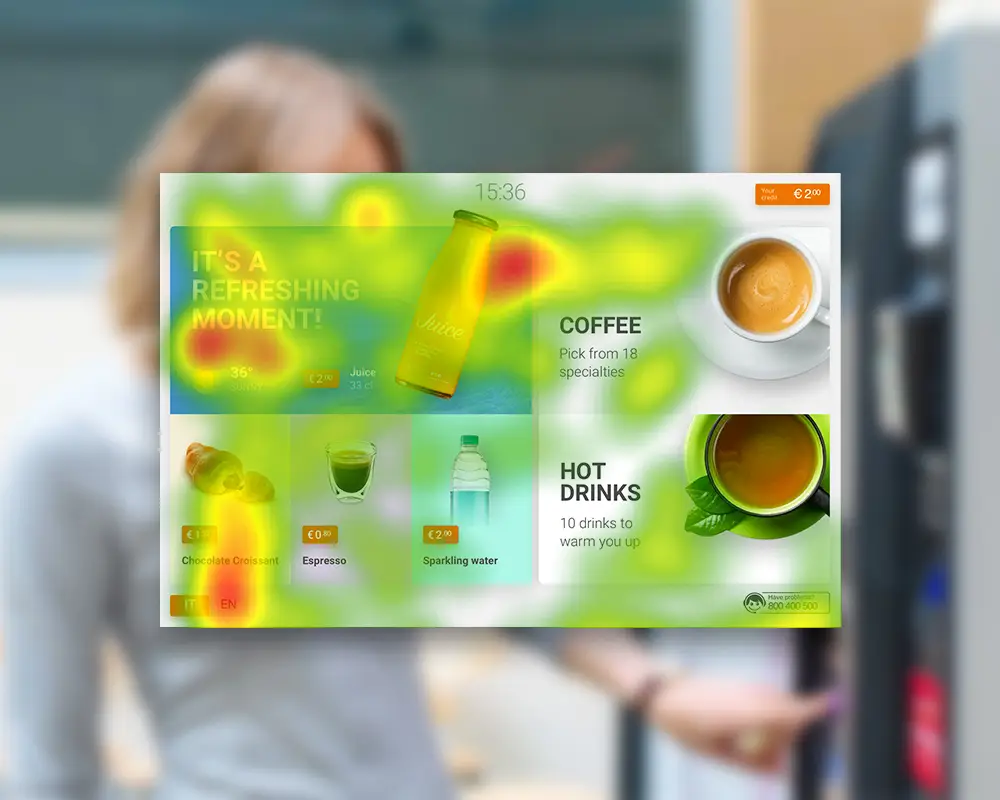
Passive eye tracking, on the other hand, is typically exploratory: it allows for the precise tracking of a user’s User Experience (UX), recording the areas, timing, and sequence of eye movements made during interaction with a web page, but also in front of a product on a store shelf or an advertisement. If employed in marketing, passive eye tracking is a very useful tool for market research.
By detecting the touchpoints that attract the attention of the examined subjects in every situation and context, as well as the involuntary attitudes assumed by the eye, it is possible to improve what has been created and thus positively impact the user experience.
Precise information, beyond the limits of the explicit
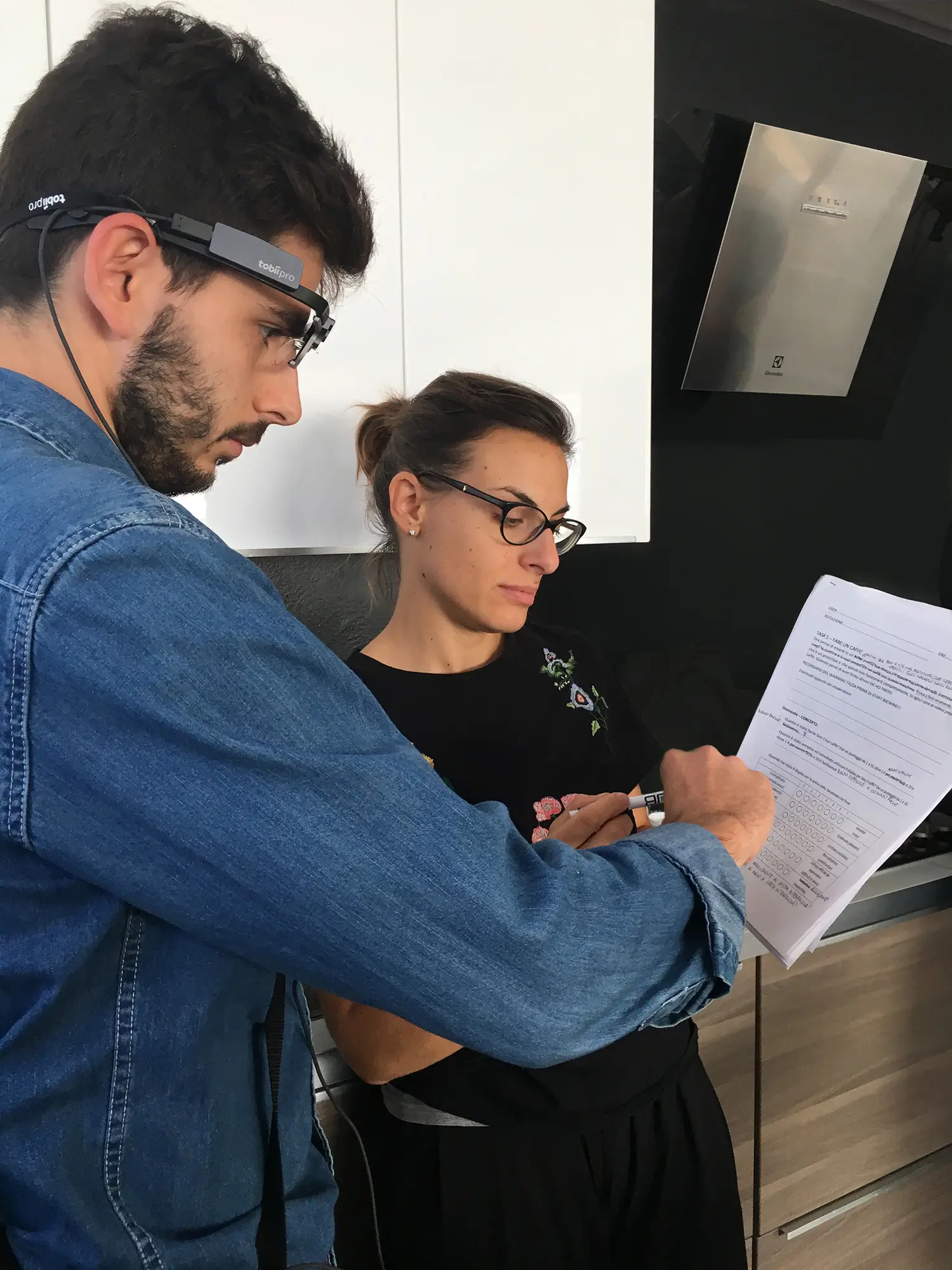
“With this technology,” says Raffaella Calligher, “we can overcome the limits of the explicit and the cognitive biases that can be encountered when using traditional methodologies such as interviews and questionnaires—namely, the impossibility of knowing if the verbal responses provided by subjects during tests are objective and transparent.
With eye tracking, we enter the sphere of the implicit, because it is impossible to force eye movement; it is a ballistic movement, meaning it responds to what it is attracted to. This allows us to have much more precise and accurate responses, to know exactly if a user goes straight to the objective when faced with a task, if the instructions provided are sufficient or need integration, or if a specific chromatic contrast is correct. If we have this type of information, we can improve our product, whatever it may be.”

Evolution: The technological integration of eye tracking
Eye tracking is a technology that we can define as ‘smart.’ Compared to the past, it is more simplified, sophisticated, and miniaturized. It is increasingly applicable to different sectors and tools. “Today, we are able to integrate eye tracking within other systems to enhance their functionality,” Raffaella Calligher explains.
“In the museum sector, we have created an interactive kiosk, an eye-controlled information point. The installation interacts with the person and, in turn, provides content tailored to the target audience. In this field, eye tracking has an educational function, but the same principle is applicable to digital promoters that can be installed in airports, stations, and shopping malls. In recent years, we have recorded a significant increase in the demand for services and products with eye-tracking technology, which can also be integrated with augmented reality headsets or inside cars to monitor attention while driving. I believe that in the future,” she concludes, “we will move more and more towards a greater use of this technology.”
Recerence: Studio Volpi
Want to know more? Contact us