Wayfinding and eye tracking: understanding how people find their way by looking at where they look
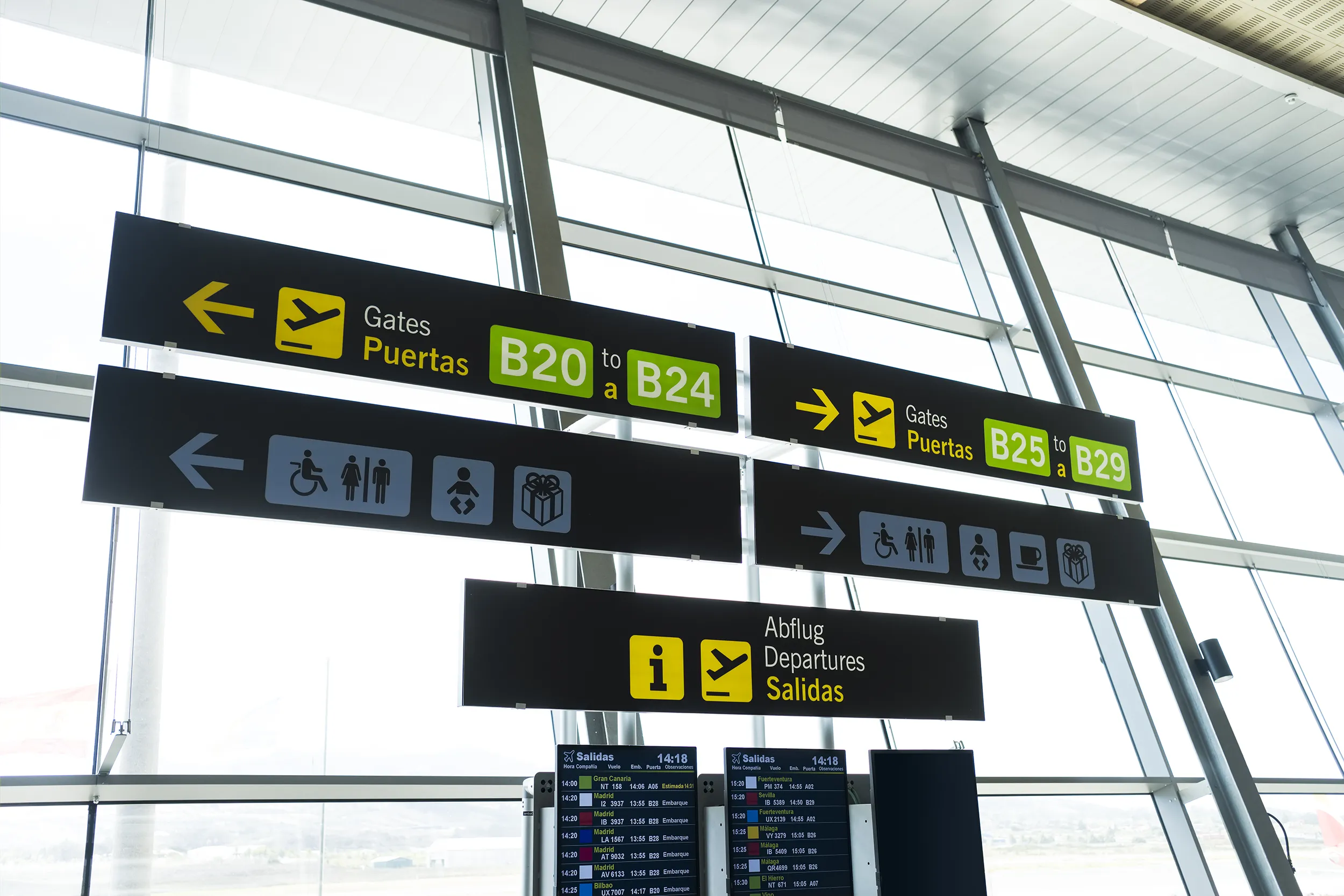
Have you ever walked into a hospital, an airport or a large shopping center and felt lost within a few seconds? There were probably dozens of signs, arrows and maps around you. And yet it wasn’t enough. Most of the time, the problem is not the amount of signage, but the way people search for, interpret and choose information while moving through space.
This is where wayfinding meets neuroscience.
What is wayfinding
The term wayfinding refers to the set of processes through which a person orients themselves in an environment, chooses a route and follows it to their destination. It was the urban planner Kevin Lynch who, in the 1960s, drew attention to the way people build a mental image of the city. Later, Romedi Passini and Paul Arthur described orientation as a genuine form of spatial problem solving, made up of decisions, actions and continuous information processing.
Wayfinding, therefore, is not the same as signage. It is a discipline that concerns the architecture of spaces, the design of routes, visual landmarks, the hierarchy of information and, above all, the mind of the person moving through that space: a first-time visitor, an anxious patient, a traveler in a hurry, an elderly person.
The limits of traditional approaches
To evaluate the effectiveness of a wayfinding system, questionnaires, interviews or field observations are often used. These are useful tools, but they have an important limitation: they rely on what people remember and are able to report.
Yet much of the orientation process is fast, automatic and barely accessible to awareness. Asking someone “Did you see that sign?” often leads to inaccurate answers: people tend to reconstruct events after the fact, to rationalize, to forget the moments of hesitation. To design truly intuitive spaces, you need data collected while the experience is happening.
Eye tracking: seeing what the person sees
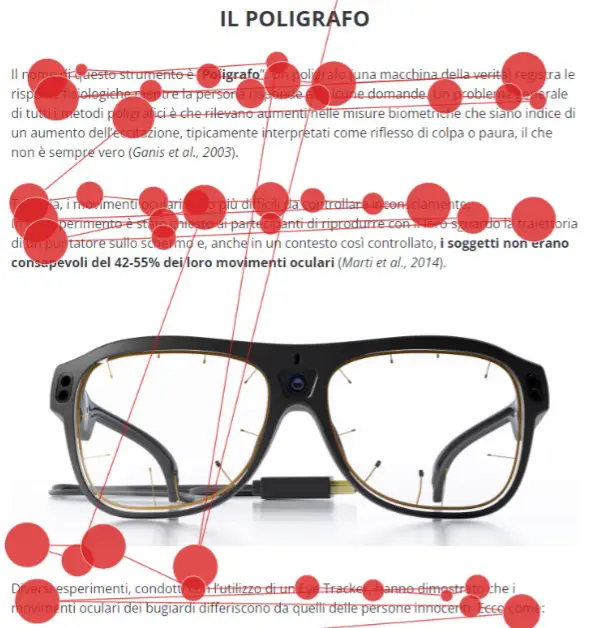
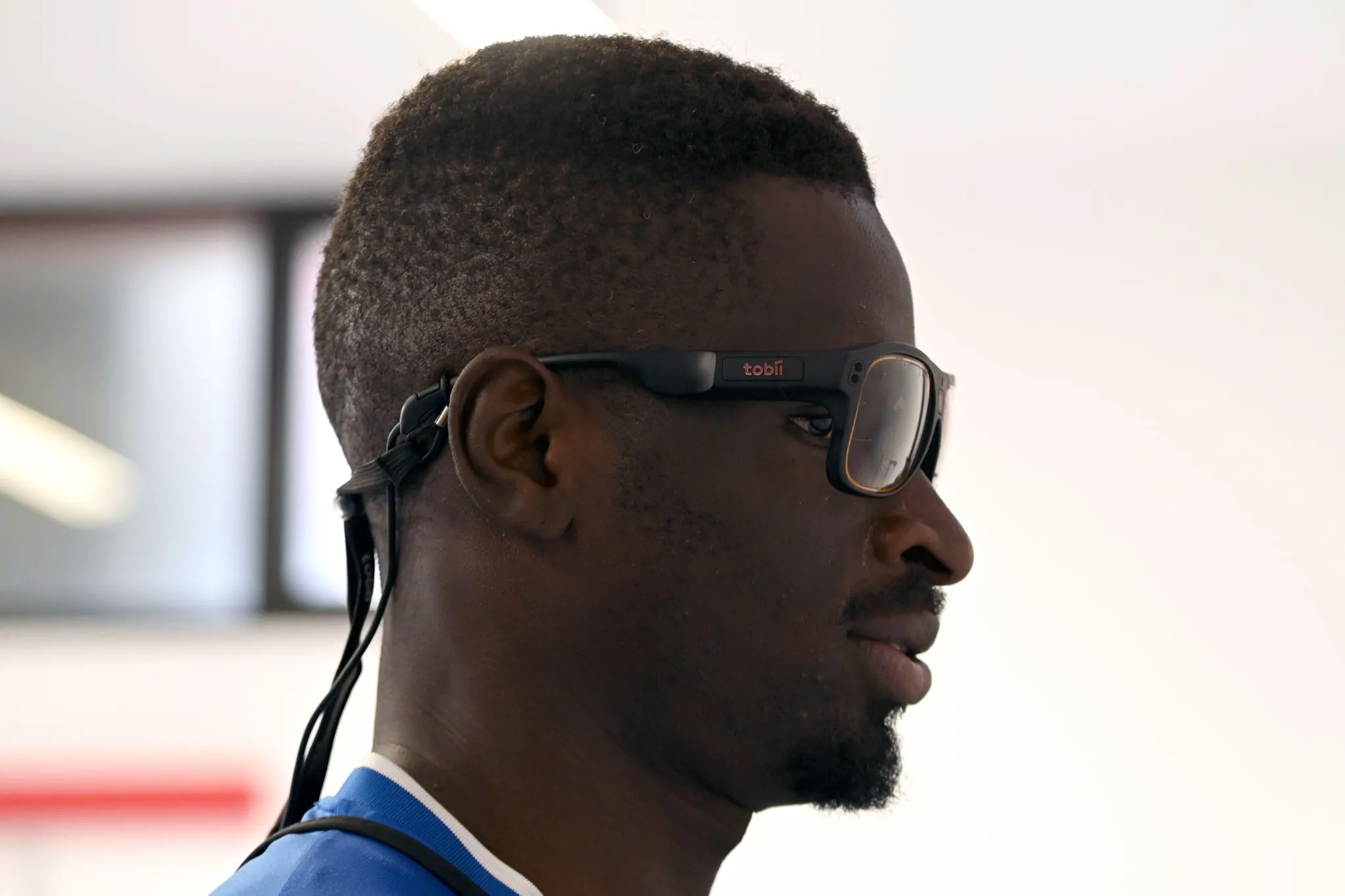
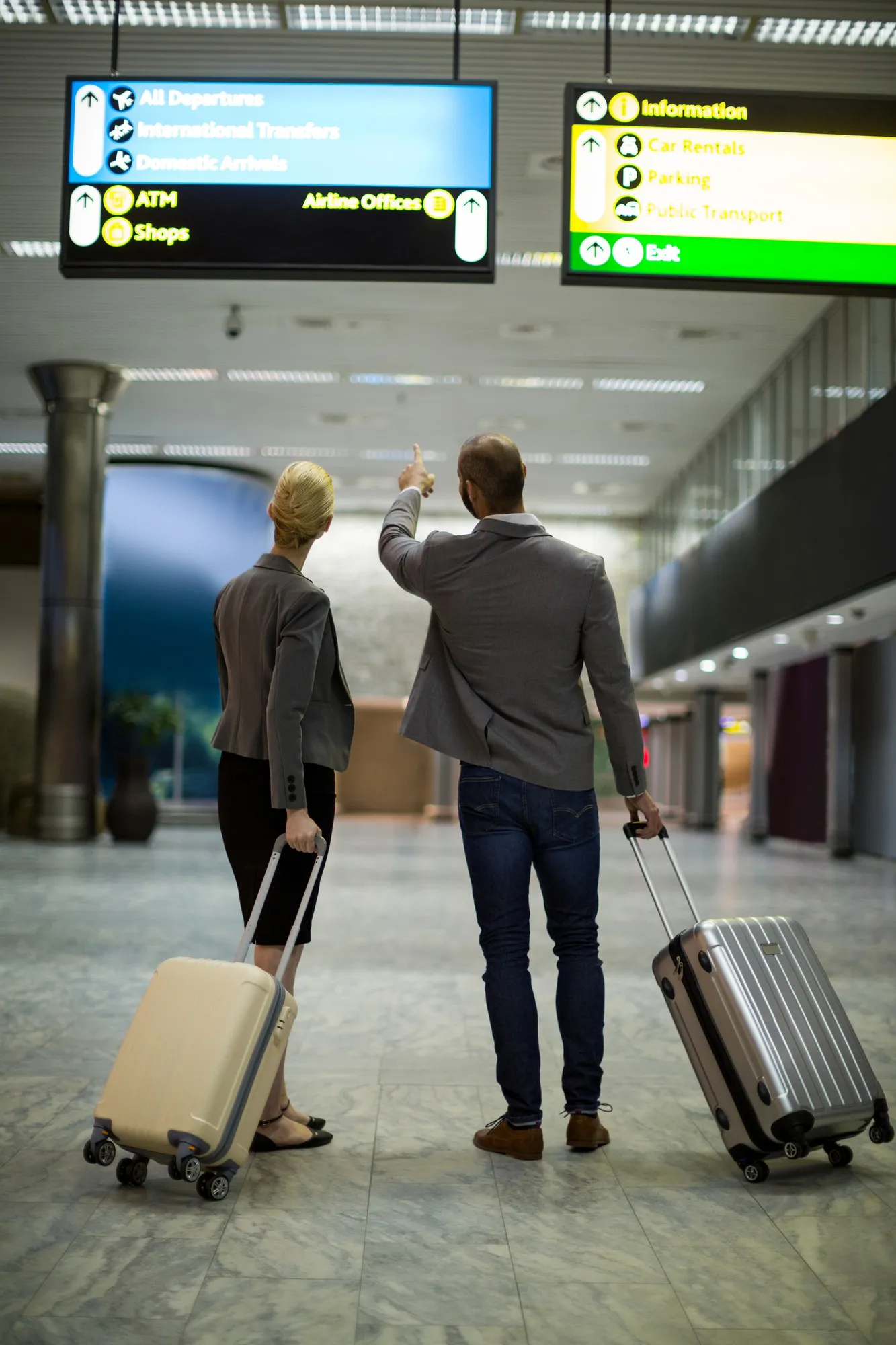
Eye tracking measures in real time where a person looks, for how long and in what sequence. In wayfinding, eye tracking glasses are typically used, allowing researchers to follow the participant along a real route, or virtual reality environments with eye tracking, which are useful for testing design solutions before they are built. Even at this level, the data answer very concrete questions: was the sign noticed, and how long did it take? Which elements of the environment capture attention instead of the signage? Is the information read in full or only in part? Understanding what is seen and what is not seen is the first, fundamental step, but stopping here would mean exploiting only part of the technique’s potential.
The real leap in quality comes from linking visual attention data to mental states and/or faculties: in many situations, what a person is looking at coincides with what they are processing at that moment, with a minimal delay between the two processes. In other words, gaze is not just a motor action, but a window onto cognitive activity. If we accept this principle, eye movements become clues to deeper processes. In the context of wayfinding, for example:
- FIXATION DURATION. Long fixations on a sign or a map may indicate difficulty in decoding, ambiguous information or high cognitive load.
- REFIXATIONS AND RETURNS. Going back to the same element several times suggests uncertainty: the person is checking, comparing, looking for confirmation of a decision.
- EXPLORATION PATTERNS. A gaze that rapidly jumps between several points without settling reveals a disorganized search, typical of someone who does not yet have a clear hypothesis about where to go.
- GAZE SEQUENCE. The order in which elements are looked at shows the actual information hierarchy, which may be very different from the one imagined by the designer.
- PUPIL DILATION. Together with other indicators, it can offer information about cognitive effort and arousal during decision-making moments.
Reading the data in this way means moving from a descriptive question (“where did they look?”) to an interpretive one (“what were they trying to understand, and why did they hesitate?”). This makes it possible to identify moments of uncertainty, the points where the person formulates and tests hypotheses about the route, and the passages where the design does not adequately support decision-making.
However, a clarification is in order. Gaze does not always coincide with attention: we can process information through peripheral vision, and we can look at something while our mind is elsewhere. For this reason, the interpretation of eye data should never be mechanical. The most robust approach combines eye tracking with other sources: retrospective interviews guided by the same gaze recordings, behavioral metrics (times, errors, deviations from the route) and, when appropriate, complementary neurophysiological measures. It is from the integration of these levels that truly reliable insights emerge.
Where it adds the most value
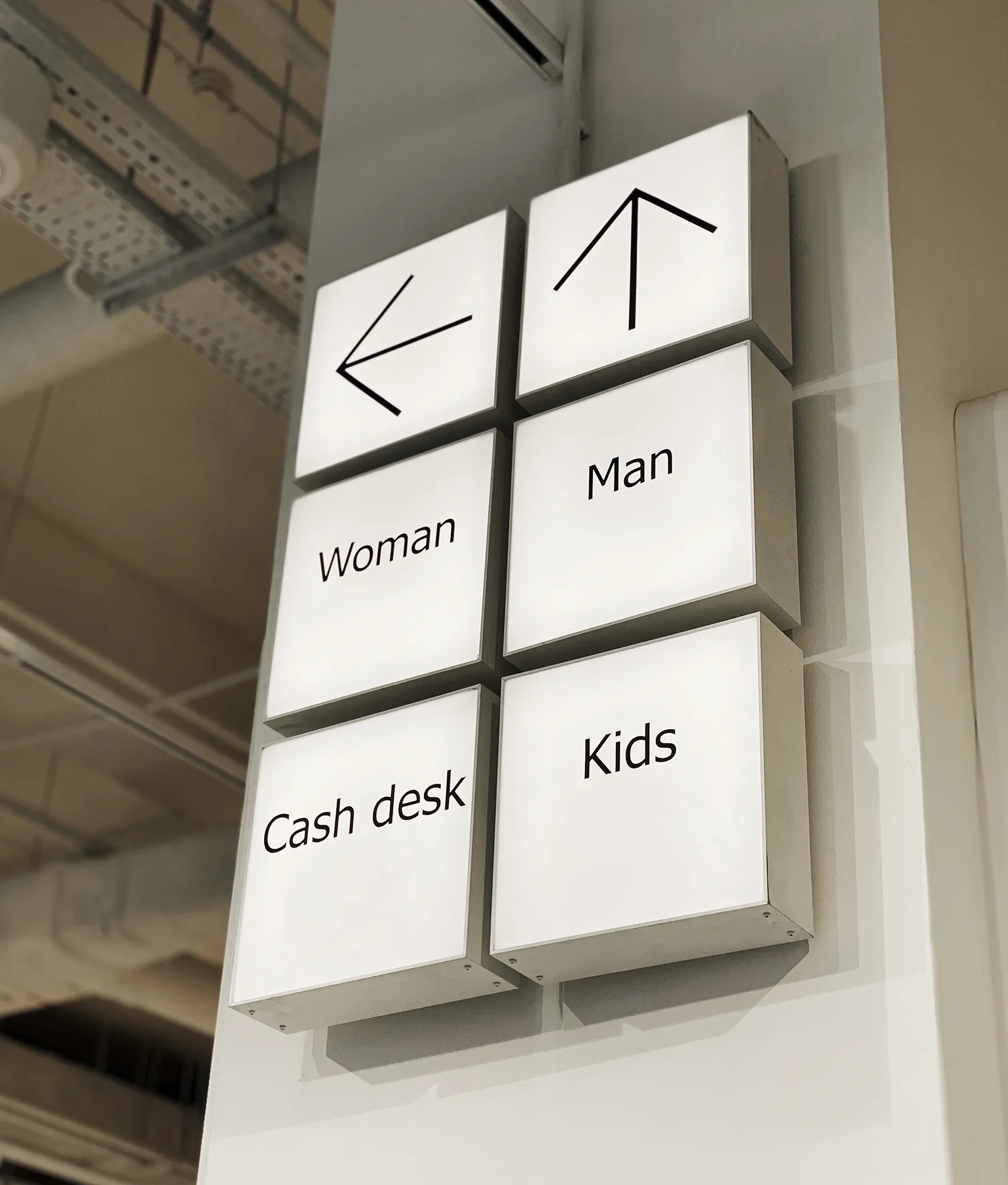
The areas of application are numerous: healthcare facilities, where orientation affects the stress levels of patients and family members; airports and stations, where time is tight and flows are complex; shopping centers, museums and trade fairs, where orientation directly shapes the experience; offices, universities and public spaces, to reduce difficulties for those accessing them for the first time.
In all these cases, a good wayfinding system is not just an aesthetic or functional matter. It is a way to reduce cognitive load, improve the experience and make spaces more accessible to everyone.
The real leap in quality comes from linking visual attention data to mental states and/or faculties: in many situations, what a person is looking at coincides with what they are processing at that moment, with a minimal delay between the two processes. In other words, gaze is not just a motor action, but a window onto cognitive activity. If we accept this principle, eye movements become clues to deeper processes. In the context of wayfinding, for example:
Do you want to understand how people really experience your spaces?
If you are designing, rethinking or evaluating a wayfinding system and want to base your choices on objective data, the SR Labs team can support you in building a tailor-made study, from defining the objectives to operational recommendations.
Contact us to tell us about your project:
together we will discover what the people who move through your spaces see, and above all, what they think.