

Tobii Pro Spectrum
Our most powerful eye tracking system captures gaze data at up to 1200 Hz. This high-performance device offers superior data quality and is designed for in-depth research on eye behavior and movements, from fixation-based studies to micro-saccades.
Using Tobii Pro Spectrum in 3 easy steps
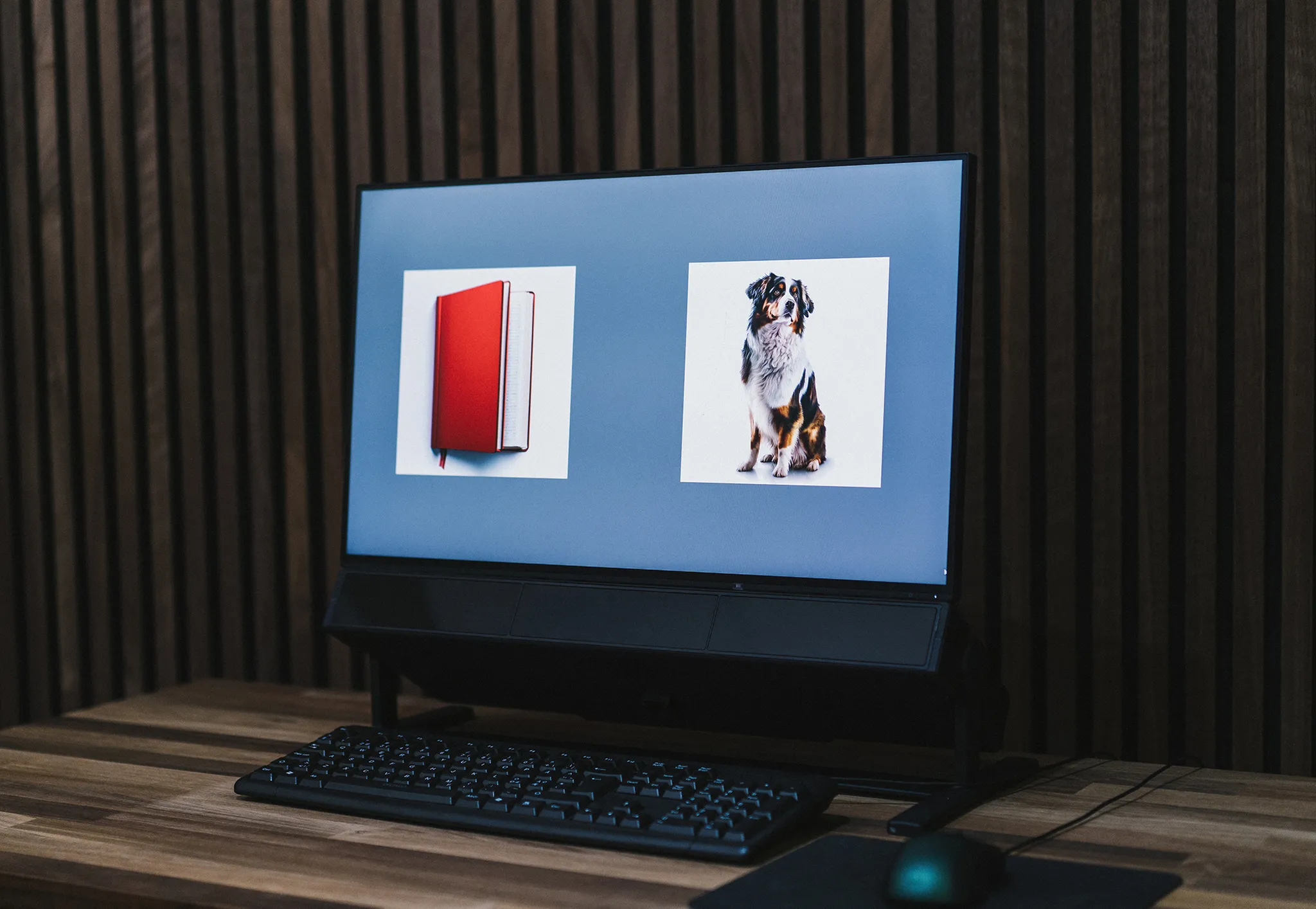
Set up
Tobii Pro Spectrum can be used with both on-screen and real-world stimuli. It comes fully assembled in the supplied travel case and doesn’t require manual configuration of cameras or lenses.

Capture
Collect data from participants at multiple sampling rates of up to 1200hz. Study fixations, saccades, micro-saccades, and tremors, and record pupil diameter and eye openness data.
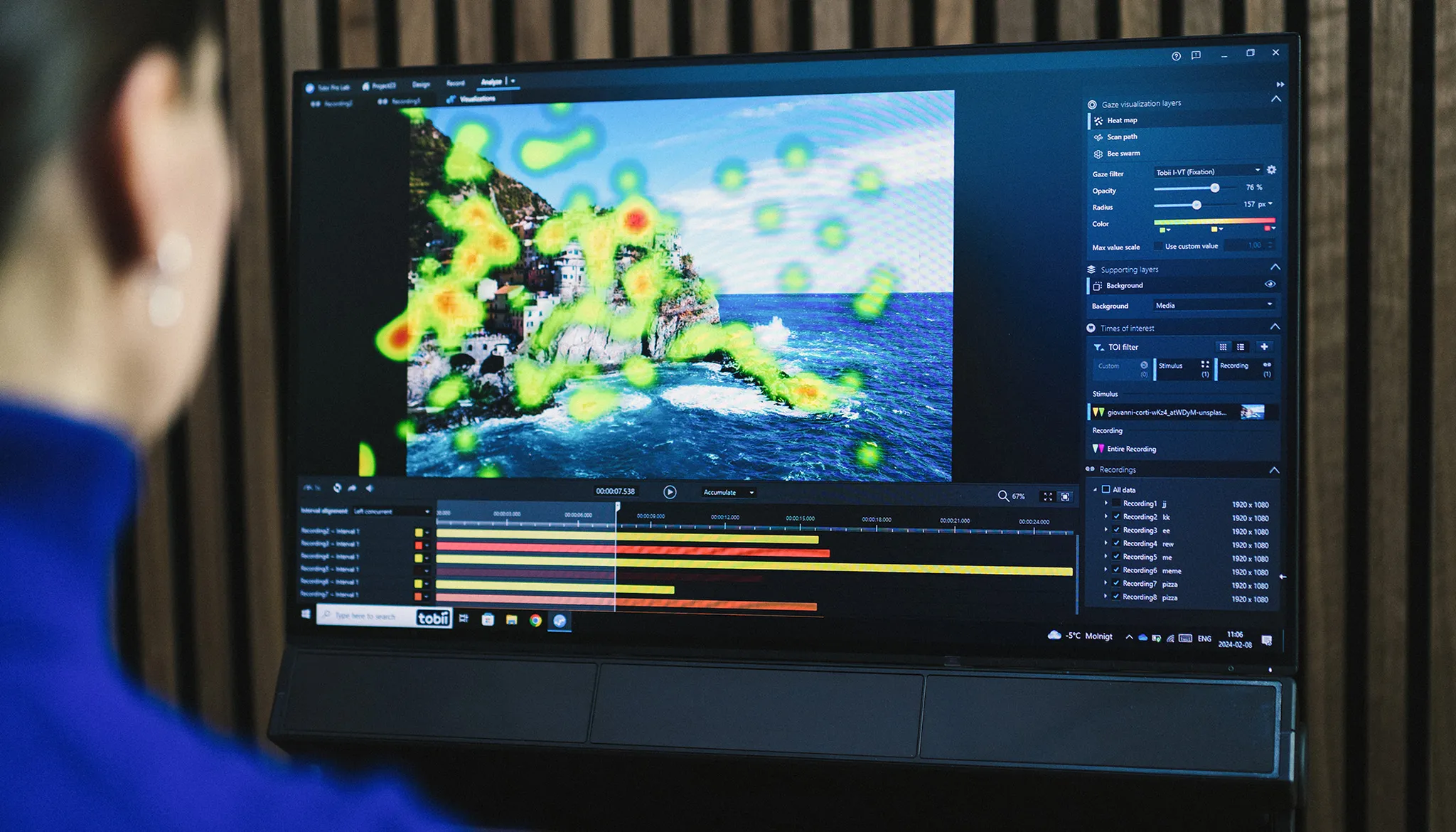
Understand
Tobii Pro Spectrum works with our software, Tobii Pro Lab, supporting researchers from experiment design to data analysis. Calculate eye tracking metrics, create visual representations of data or export for further analysis in other software.
About the tech
- Our patented 3D eye model delivers high-quality gaze, pupil and eye openness data
- Two eye tracking cameras, taking up to 1200 images per second
- Fully embedded processing and automatic selection of bright and dark pupil modes for best performance
- Compatible with all main operating systems
- Software for the standalone configuration accommodates studies involving real-world stimuli
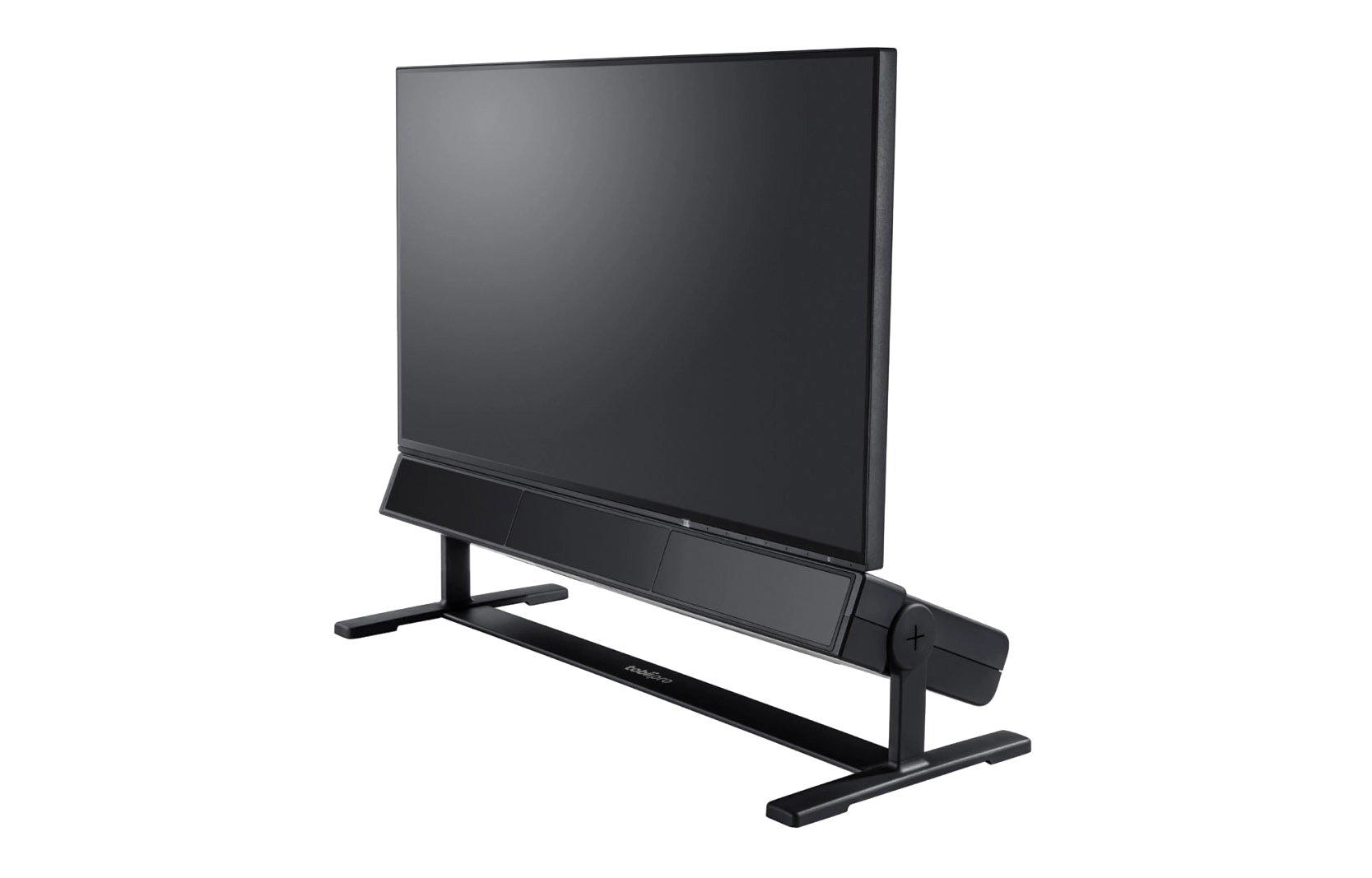
- VESA mounting available for fixed table or wall installation
- The handle allows for smooth adjustment for subjects of different heights
Technical specifications
|
Eye tracking technique |
Video-based pupil and corneal reflection eye tracking with dark and bright pupil illumination modes. Two cameras capture stereo images of both eyes for robust accurate measurement of eye gaze and eye position in 3D space, as well as pupil diameter. |
|
Eye tracking mode |
Tobii Pro Spectrum has four different eye tracking modes for different groups of primate species: |
|
Sampling frequency |
60 Hz, 120 Hz, 150 Hz, 300 Hz, 600 Hz, or 1200 Hz (max. frequency depends on hardware version) |
|
Precision |
Head supported Head free-to-move |
|
Accuracy |
Head supported Head free-to-move |
|
Binocular eye tracking |
Yes |
|
Eye tracker latency |
Mean latency < 2 ms @ 1200Hz (SD < 0.2 ms) |
|
Blink recovery time |
1 frame (immediate) |
|
Gaze recovery time |
Less than 150 ms |
|
Data sample output |
Timestamp, |
|
Eye openness data stream |
Eye openness stream has the same frequency as frequency selected for the gaze stream and will have the same timestamps. Eye openness data is provided in millimeters, for each eye individually. |
|
Eye image data stream |
Eye image stream frequency is approximately 10 Hz (one image with both eyes). Zoomed-in eye images available in tracking mode. Full-frame camera images are available in gaze recovery mode. |
|
TTL input stream |
8–bit timestamped data (256 event codes) – |
|
Tracker and client time synchronization |
Integrated between the eye tracker time domain and the client computer time domain with an accuracy of 100 µs |
|
User calibration |
Binocular, Monocular |
|
Head movement tolerance |
Excellent. |
|
Operating distance (mounted on screen) |
55 to 75 cm (22″ and 30″) from the eye tracker |
|
Freedom of head movement (width x height) |
Freedom of head movement at 65cm distance |
|
Optimal screen size |
Up to 24″ (16:9 aspect ratio) |
|
Recommended monitor |
Supplied 23.8″ monitor |
|
Tracker setup options |
Eye tracker unit can be used alone or together with the monitor or other screens. |
|
Participant setup |
Very simple and easy. Typically, less than 1 minute. |
|
Software and framework compatibility |
Tobii Pro Lab, Any applications built on the Tobii Pro SDK |
|
Operating system |
Windows, macOS, Linux |
|
Hardware versions |
300 Hz – 600 Hz – 1200 Hz |
|
Dimensions (L x H x W) |
55 cm × 18 cm × 6 cm (22″ × 7″ × 2″). |
|
Weight |
5.1 kg (11.4 lbs.) – |
|
Connectors |
TTL input: 8-bit (DB-9 connector) – |
|
Data Processing |
Fully embedded data processing |
|
Eye tracking cameras |
N/A |
|
Illuminators |
Dark pupil illumination modules. |
|
Power consumption |
Typical power consumption: 60 W |
|
Power options |
Input: 100-240 VAC 50/60 Hz – Energy efficiency level: VI – Complies with EISA 2007/DoE, NRCan, AU/NZ MEPS, EU ErP, and CoC Version 5 |
|
Monitor model name |
EIZO FlexScan EV2451 | EIZO FlexScan EV2480 |
|
Panel type |
IPS, LED backlight |
IPS, LED backlight |
|
Screen size (diagonal) |
23.8″ |
23.8″ |
|
Weight/strong>
|
3.8 kg (8.4 lbs), incl. mounting |
4.7 kg (10.4 lbs), incl. mounting |
|
Aspect ratio |
16:9 |
16:9 |
|
Resolution |
1920 x 1080 pixels |
1920 x 1080 pixels |
|
Screen response time |
5 ms (Gray-to-gray) |
5 ms (Gray-to-gray) |
|
Connectors |
DVI, VGA, |
1 x USB-C Thunderbolt 3 port (DisplayPort Alt Mode), |
|
Built in speakers |
1.0 W + 1.0 W |
1.0 W + 1.0 W |
|
Power supply |
100-240 VAC 50/60 Hz |
100-240 VAC 50/60 Hz/p> |
|
Power |
Max. rated power consumption: 42 W, |
Max. rated power consumption: 142 W, |
Contact us and request a quote
All media are ©Tobii. All Rights Reserved.
2026 © SR Labs s.r.l. All Rights Reserved. P.IVA IT03283700965 – Informativa Privacy