
Tobii Pro Fusion
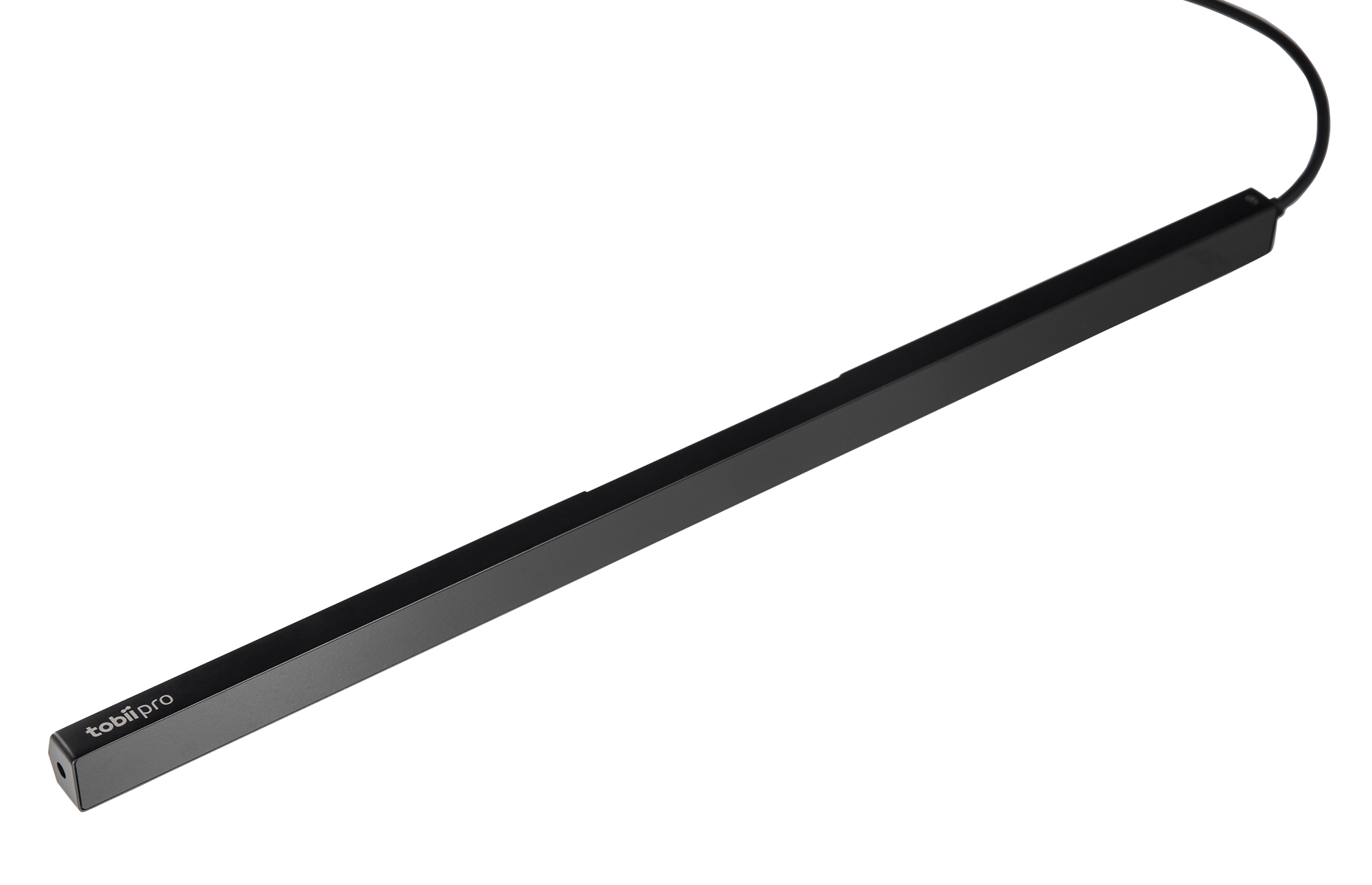
Our mid-range research eye tracker is versatile and powerful, capturing gaze data at 250 Hz. Ideal for both fixation and saccade studies. Compact and easily portable, it allows for data collection in both lab settings and less controlled environments.
Using Tobii Pro Fusion in 3 easy steps
Set up
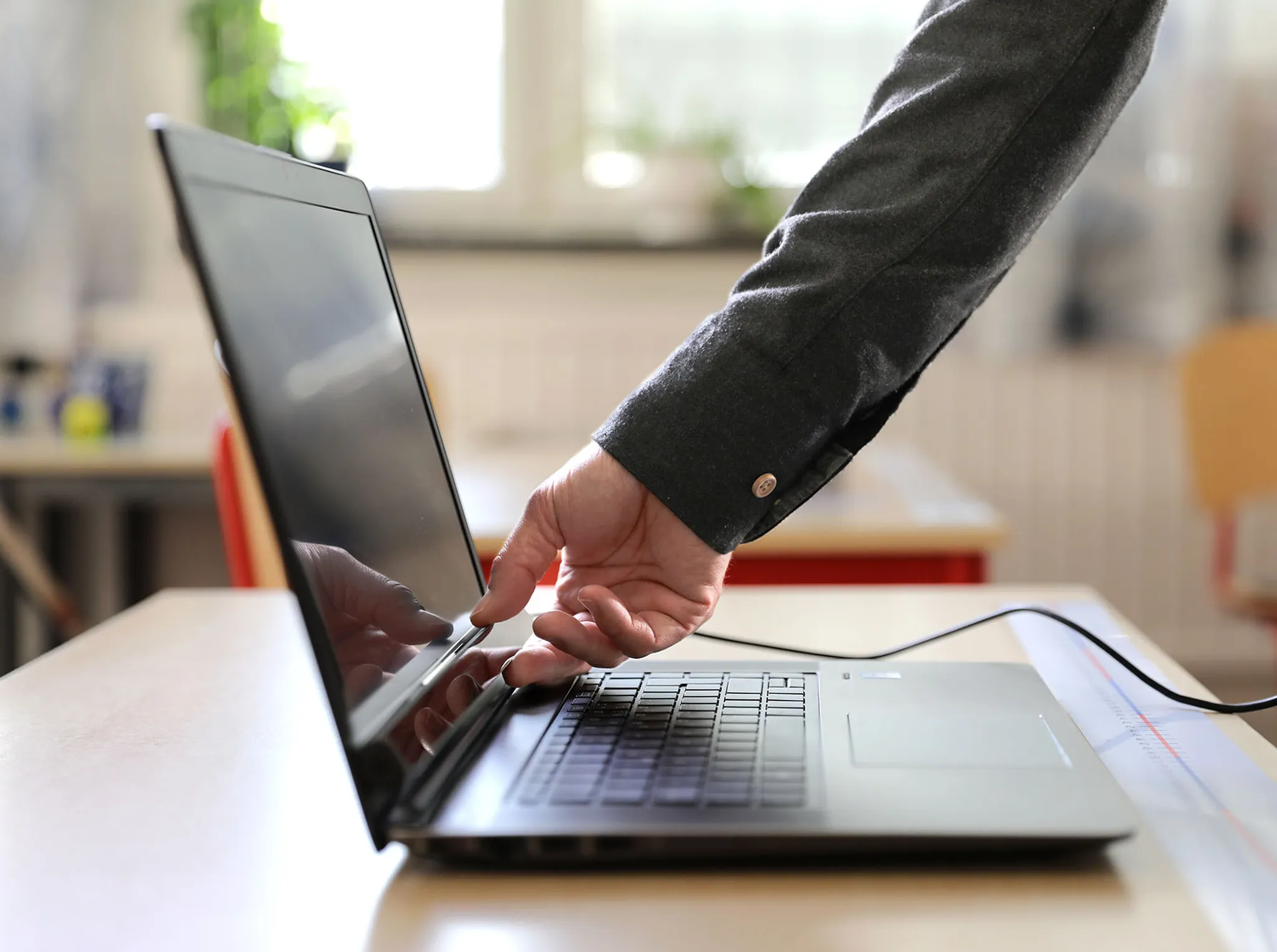
Tobii Pro Fusion is compatible with a range of standalone monitors and laptop screens up to 24” in size and connects via USB. It can also be placed on a tripod for studies of real-world stimuli.
Capture
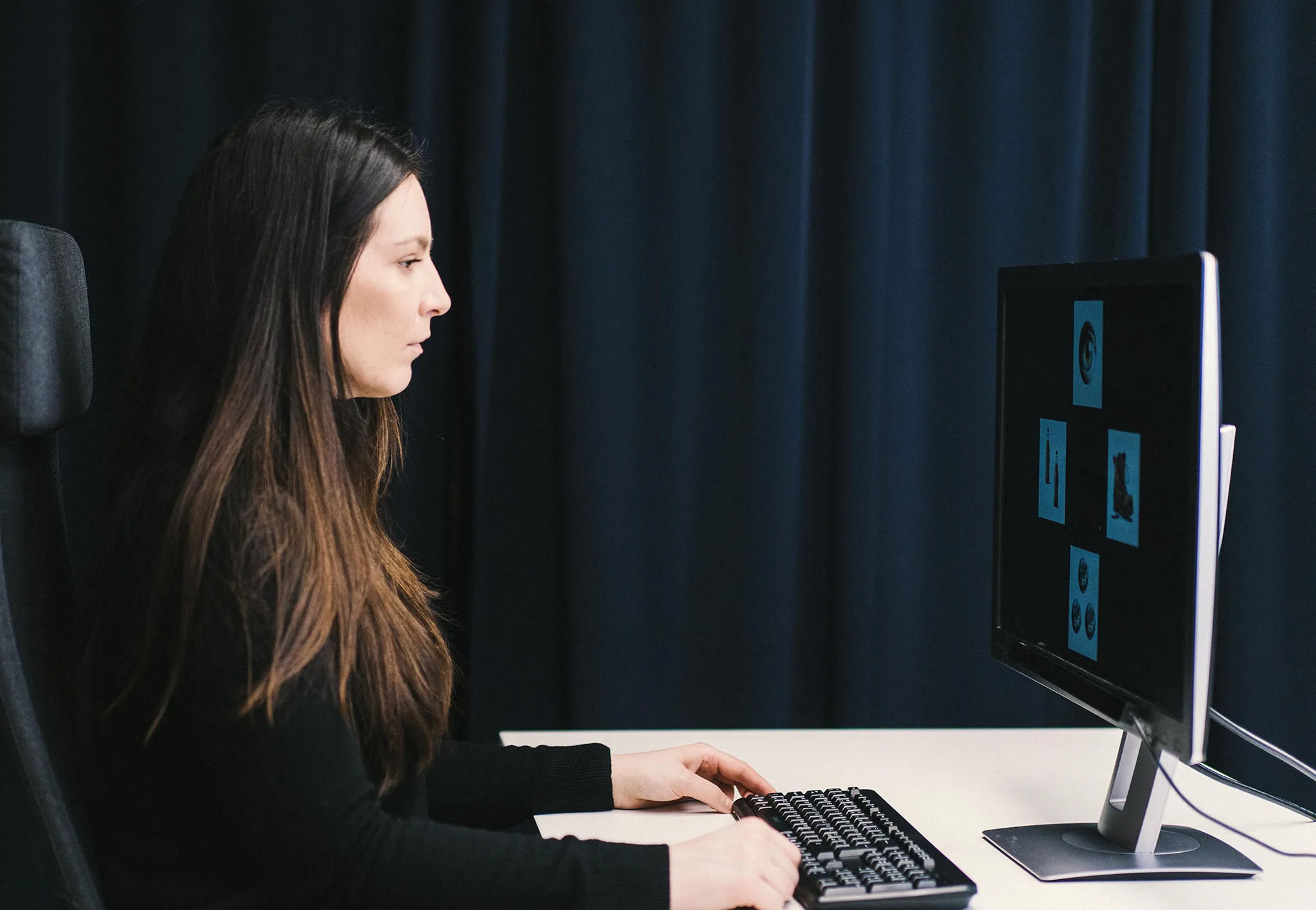
Multiple sampling rates of up to 250 Hz allow you to collect data for eye movements such as fixations, saccades, and smooth pursuit. Additionally, you can record pupil diameter and eye openness data.
Understand
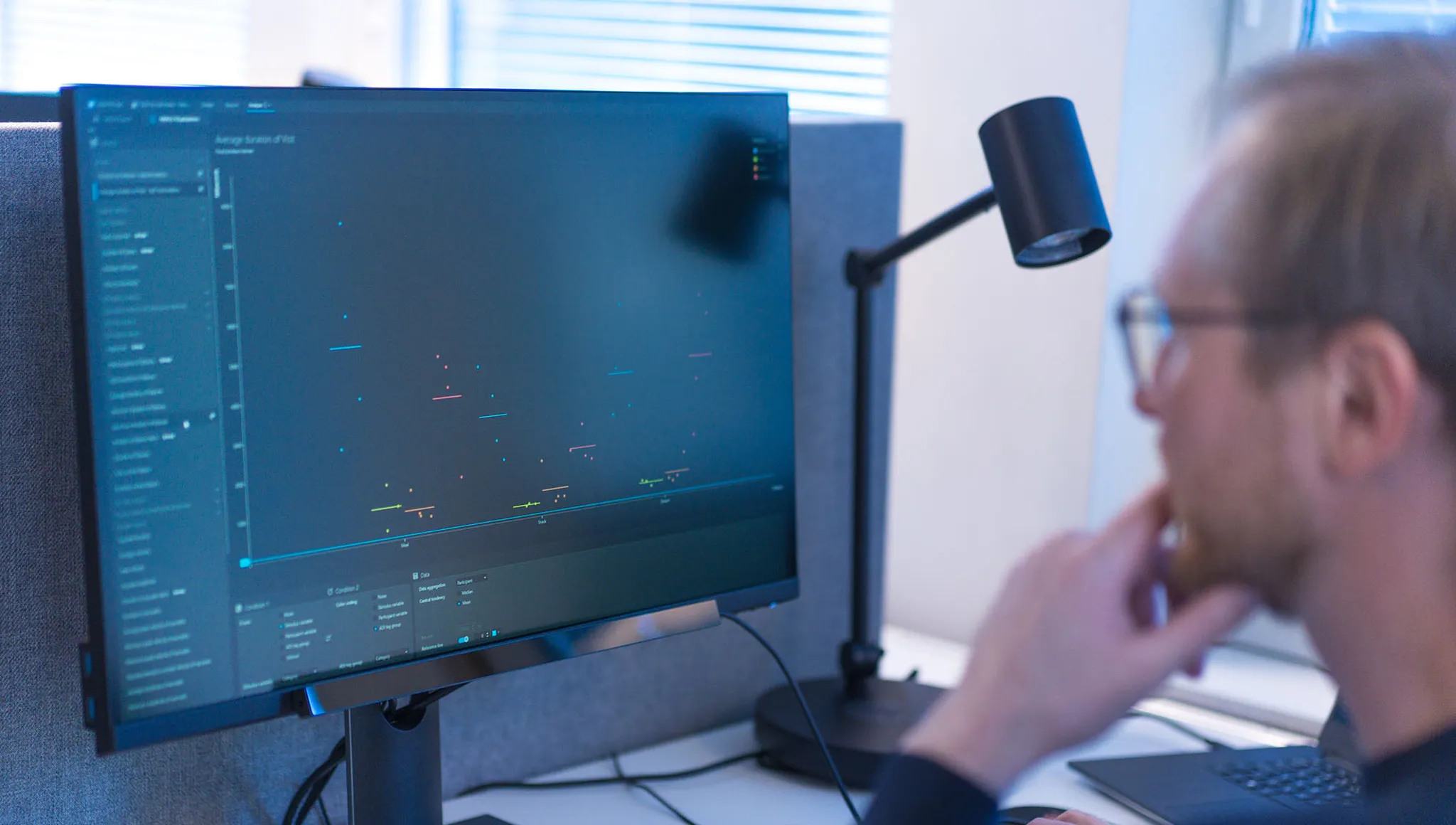
Tobii Pro Fusion works with our software, Tobii Pro Lab, supporting researchers from experiment design to data analysis. Calculate eye tracking metrics, create visual representations of data or export for further analysis in other software.
About the tech
- Our patented 3D eye model delivers high-quality gaze and pupil data
- Two eye tracking cameras, taking up to 250 images per second
- Bright and dark pupil illumination modes automatically selected for best performance
- Fully embedded processing
- Easy USB or USB-C connectivity
- Compatible with all main operating systems
- Accurate software synchronization options with a wide range of external devices, such as EEG, ECG or GSR
Technical specifications
|
Eye tracking technique |
Video-based pupil and corneal reflection eye tracking with dark and bright pupil illumination modes. Dark pupil tracking is supported in all sample frequencies. Bright pupil tracking is supported at 60 and 120 Hz. Two cameras capture stereo images of both eyes for robust accurate measurement of eye gaze and eye position in 3D space, as well as pupil diameter. |
|
Eye tracking mode |
N/A (default) |
|
Sampling frequency |
30 Hz, 60 Hz, 120 Hz, or 250 Hz |
|
Precision |
0.04° RMS in optimal conditions (applying Savitzky-Golay filtering, settings listed in the test report) – |
|
Accuracy |
0.3° in optimal conditions |
|
Binocular eye tracking |
Yes |
|
Eye tracker latency |
Mean latency < 13 ms @ 250 Hz (SD < 1.2 ms) |
|
Blink recovery time |
1 frame (immediate) |
|
Gaze recovery time |
250 ms |
|
Data sample output |
Timestamp, |
|
Eye openness data stream |
Eye openness stream is available in eye tracker set to 120 Hz, 60 Hz, and 30 Hz sampling frequencies. Note that the eye openness signal is not available in 250 Hz due to the processing power limitation. Eye openness stream has the same frequency as the gaze stream and will have the same timestamps. Eye openness data is provided in millimeters for each eye individually. |
|
Eye image data stream |
Eye image data stream frequency is approximately 4 Hz (one image per eye). |
|
TTL input stream |
Not available |
|
Tracker and client time synchronization |
Integrated between the eye tracker time domain and the client computer time domain. |
|
User calibration |
Binocular, Monocular |
|
Head movement tolerance |
Excellent. |
|
Operating distance (mounted on screen) |
50 cm to 80 cm (20” to 31”) from the eye tracker |
|
Freedom of head movement |
Freedom of head movement at 65cm distance – Freedom of head movement at 80cm distance – |
|
Optimal screen size |
Up to 24″ (16:9 aspect ratio) |
|
Recommended monitor |
N/A |
|
Tracker setup options |
Eye tracker mounted on a tripod, allows for even larger screens or physical objects to be tracked. |
|
Participant setup |
Very simple and easy. Typically, less than 1 minute. |
|
Software and framework compatibility |
Tobii Pro Lab, |
|
Operating system |
Windows, macOS, Linux |
|
Hardware versions |
60Hz – 120Hz – 250Hz |
|
Dimensions (L x H x W) |
37.4 cm × 1.8 cm × 1.37 cm (14.72“ × 0.70“ × 0.53“) |
|
Weight |
168 g (5.9 oz.) |
|
Connectors |
USB Type-C, (USB Type-A to Type-C adapter provided), AC power |
|
Data Processing |
3 Tobii EyeChip™ ASIC with fully embedded data processing |
|
Eye tracking cameras |
2 x Tobii EyeSensor™ modules |
|
Illuminators |
Dark pupil illumination modules, Bright pupil illumination modules |
|
Power consumption |
Typical power consumption: 4.3 W |
|
Power options |
Directly via USB Type-C connector, or |
Contact us and request a quote
All media are ©Tobii. All Rights Reserved.
2026 © SR Labs s.r.l. All Rights Reserved. P.IVA IT03283700965 – Informativa Privacy