
Tobii Pro Fusion
Screen based eye tracker disponibile con una frequenza di rilevazione a 120 o 250 Hz. Ideale sia per gli studi sulle fissazioni che sulle saccadi. Compatto e facilmente trasportabile, consente di raccogliere i dati sia in lab che in ambienti meno controllati.
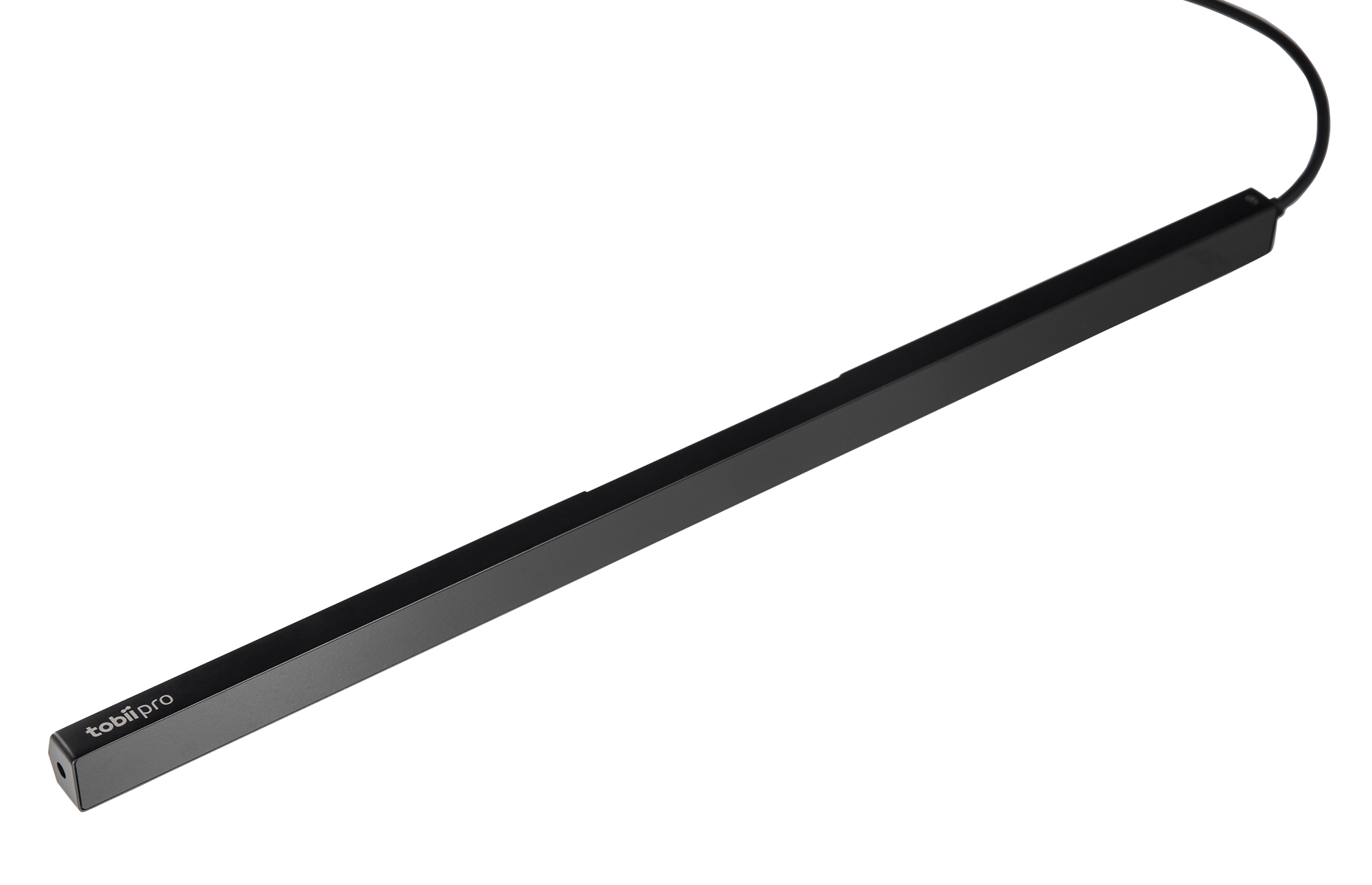
Come usare Tobii Pro Fusion in 3 semplici passaggi
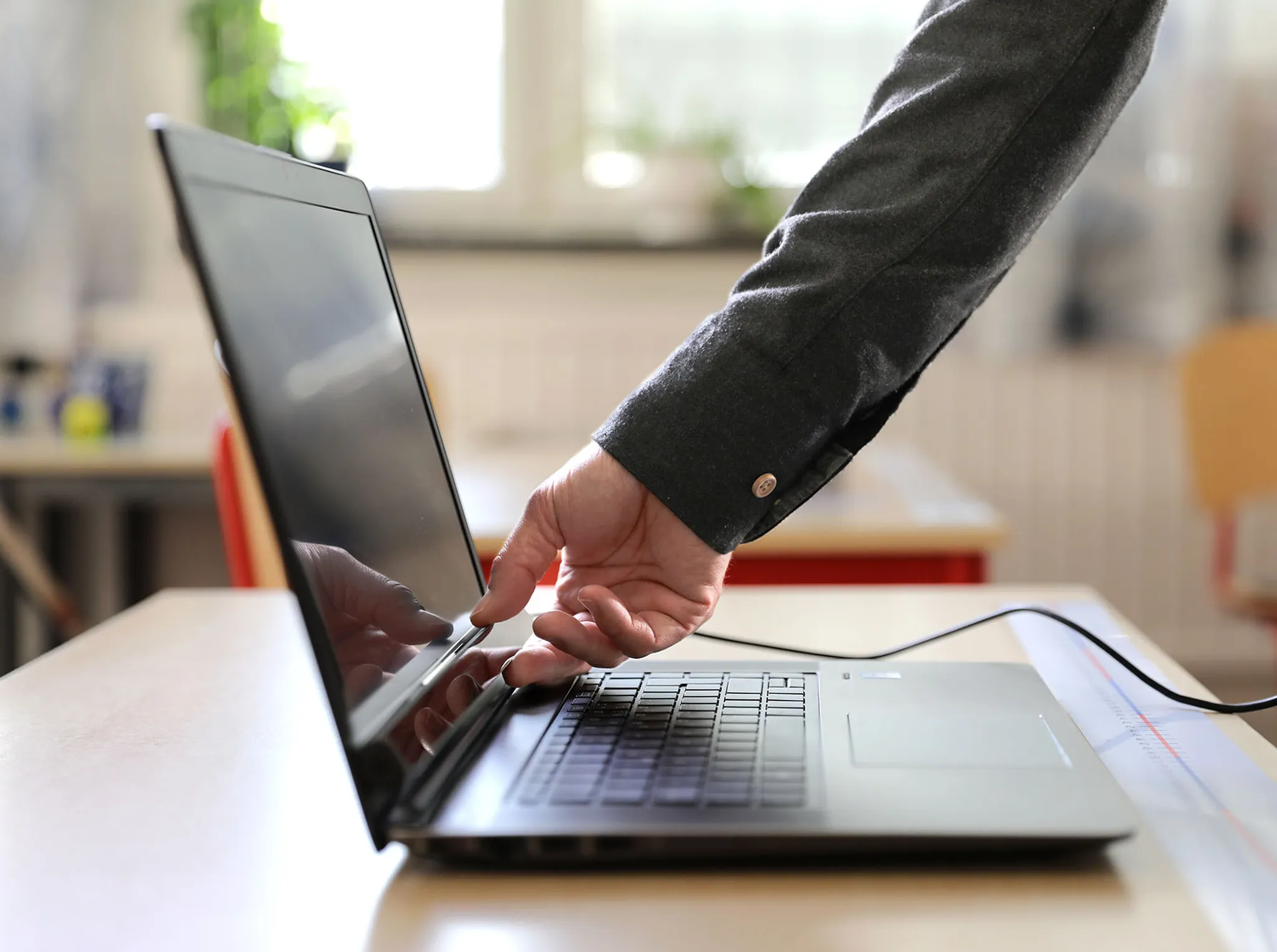
Set up
Tobii Pro Fusion è compatibile con una vasta gamma di monitor standalone e schermi per laptop fino a 24″ e si collega tramite USB. Può anche essere posizionato su un treppiede per studi su stimoli del mondo reale.
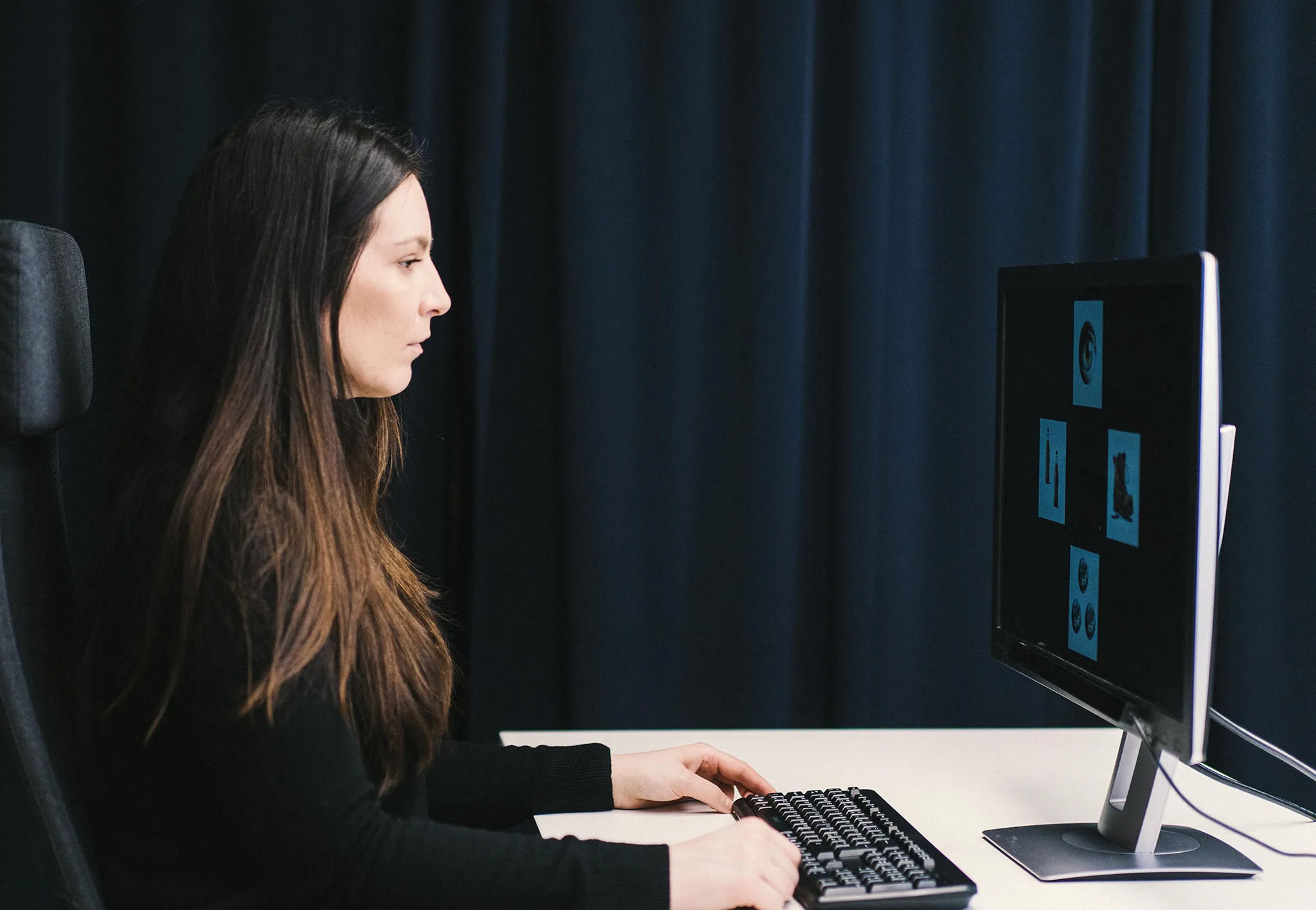
Capture
Frequenze di campionamento multiple fino a 250 Hz consentono di raccogliere dati sui movimenti oculari come fissazioni, saccadi e inseguimento fluido. Inoltre, è possibile registrare dati sul diametro della pupilla e sull’apertura oculare.
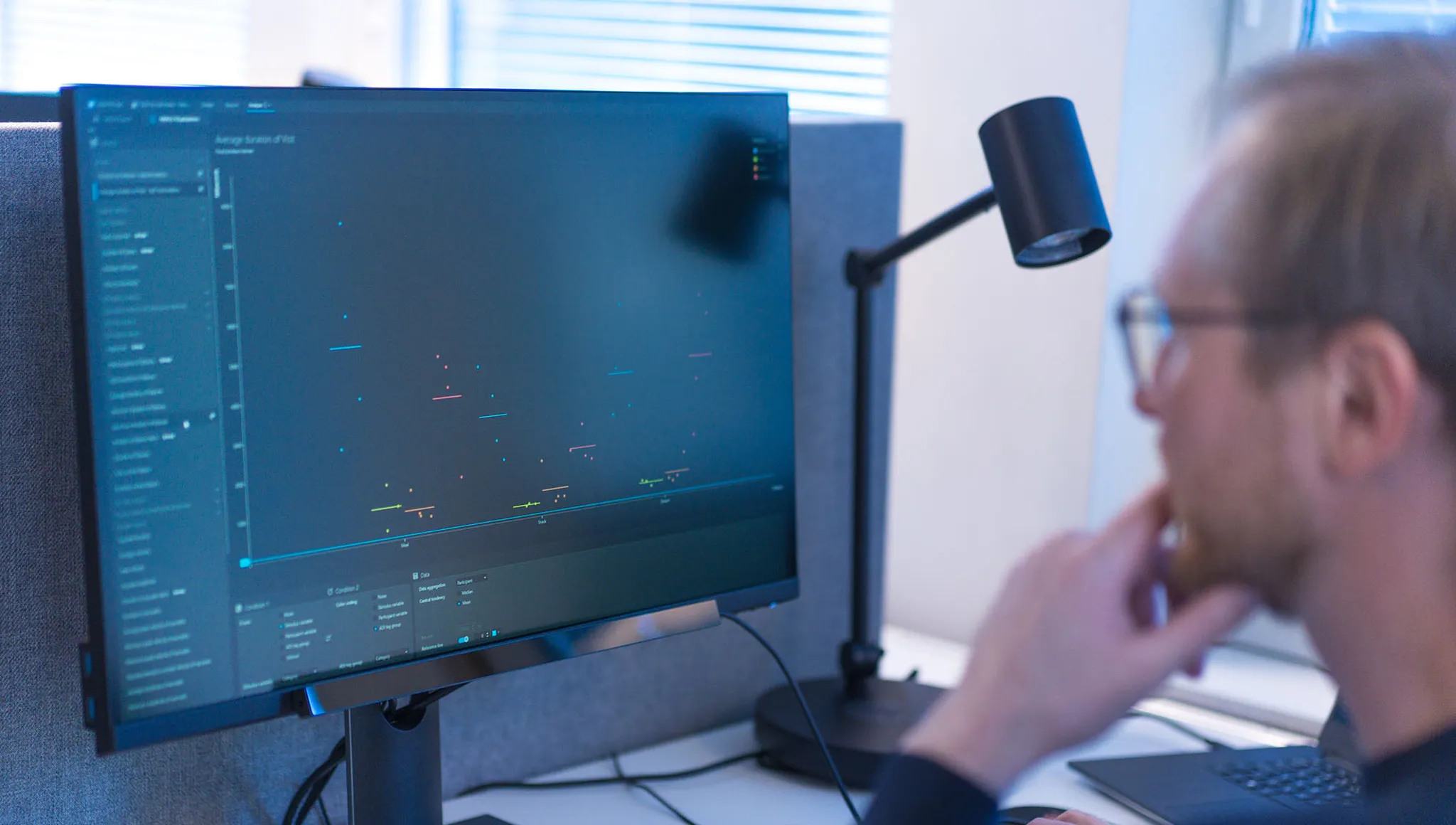
Understand
Tobii Pro Fusion si integra con il nostro software, Tobii Pro Lab, supportando i ricercatori dalla progettazione degli esperimenti all’analisi dei dati. È possibile calcolare le metriche di eye tracking, creare rappresentazioni visive dei dati o esportarli per ulteriori analisi in altri software.
Informazioni sulla tecnologia
- Il nostro modello oculare 3D brevettato fornisce dati di alta qualità su sguardo e pupilla.
- Due telecamere con eye tracking, che acquisiscono fino a 250 immagini al secondo.
- Modalità di illuminazione pupillare chiara e scura selezionate automaticamente per prestazioni ottimali.
- Elaborazione completamente integrata.
- Facile connettività USB o USB-C.
- Compatibile con tutti i principali sistemi operativi.
- Opzioni di sincronizzazione software accurate con un’ampia gamma di dispositivi esterni, come EEG, ECG o GSR.
Specifiche tecniche
| SPECS | DETAILS |
|---|---|
|
Eye tracking technique |
Video-based pupil and corneal reflection eye tracking with dark and bright pupil illumination modes. Dark pupil tracking is supported in all sample frequencies. Bright pupil tracking is supported at 60 and 120 Hz. Two cameras capture stereo images of both eyes for robust accurate measurement of eye gaze and eye position in 3D space, as well as pupil diameter. |
|
Eye tracking mode |
N/A (default) |
|
Sampling frequency |
30 Hz, 60 Hz, 120 Hz, or 250 Hz |
|
Precision |
0.04° RMS in optimal conditions (applying Savitzky-Golay filtering, settings listed in the test report) – |
|
Accuracy |
0.3° in optimal conditions |
|
Binocular eye tracking |
Yes |
|
Eye tracker latency |
Mean latency < 13 ms @ 250 Hz (SD < 1.2 ms) |
|
Blink recovery time |
1 frame (immediate) |
|
Gaze recovery time |
250 ms |
|
Data sample output |
Timestamp, |
|
Eye openness data stream |
Eye openness stream is available in eye tracker set to 120 Hz, 60 Hz, and 30 Hz sampling frequencies. Note that the eye openness signal is not available in 250 Hz due to the processing power limitation. Eye openness stream has the same frequency as the gaze stream and will have the same timestamps. Eye openness data is provided in millimeters for each eye individually. |
|
Eye image data stream |
Eye image data stream frequency is approximately 4 Hz (one image per eye). |
|
TTL input stream |
Not available |
|
Tracker and client time synchronization |
Integrated between the eye tracker time domain and the client computer time domain. |
|
User calibration |
Binocular, Monocular |
| SPECS | DETAILS |
|---|---|
|
Head movement tolerance |
Excellent. |
|
Operating distance (mounted on screen) |
50 cm to 80 cm (20” to 31”) from the eye tracker |
|
Freedom of head movement |
Freedom of head movement at 65cm distance – Freedom of head movement at 80cm distance – |
|
Optimal screen size |
Up to 24″ (16:9 aspect ratio) |
|
Recommended monitor |
N/A |
|
Tracker setup options |
Eye tracker mounted on a tripod, allows for even larger screens or physical objects to be tracked. |
|
Participant setup |
Very simple and easy. Typically, less than 1 minute. |
| SPECS | DETAILS |
|---|---|
|
Software and framework compatibility |
Tobii Pro Lab, |
|
Operating system |
Windows, macOS, Linux |
| SPECS | DETAILS |
|---|---|
|
Hardware versions |
60Hz – 120Hz – 250Hz |
| SPECS | DETAILS |
|---|---|
|
Dimensions (L x H x W) |
37.4 cm × 1.8 cm × 1.37 cm (14.72“ × 0.70“ × 0.53“) |
|
Weight |
168 g (5.9 oz.) |
|
Connectors |
USB Type-C, (USB Type-A to Type-C adapter provided), AC power |
|
Data Processing |
3 Tobii EyeChip™ ASIC with fully embedded data processing |
|
Eye tracking cameras |
2 x Tobii EyeSensor™ modules |
|
Illuminators |
Dark pupil illumination modules, Bright pupil illumination modules |
|
Power consumption |
Typical power consumption: 4.3 W |
|
Power options |
Directly via USB Type-C connector, or |
Contattaci e richiedi un preventivo
All media are ©Tobii. All Rights Reserved.
2026 © SR Labs s.r.l. All Rights Reserved. P.IVA IT03283700965 – Informativa Privacy